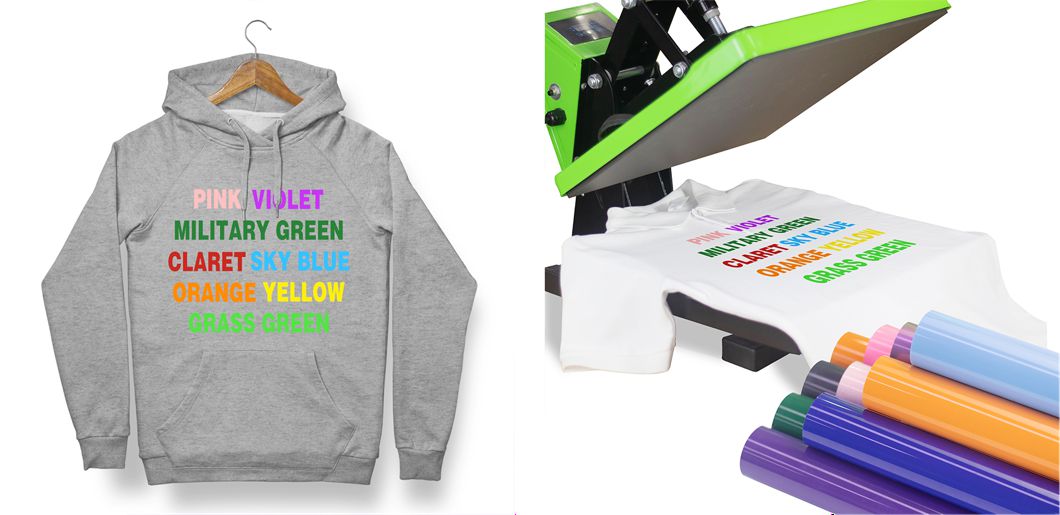
Heat transfer vinyl printing is a method that lets you customize all kinds of fabric items with the designs of your choice. The material used to create these designs is called "heat transfer vinyl," or HTV.
Heat transfer vinyl is popular with textile printing businesses because it's easy to use and affordable. To apply an HTV logo, you'll need to go through several steps, such as cutting the logo, weeding, and pressing the vinyl. We'll go over these steps in detail in section 6 of this blog post.
Fabric customization continues to draw more and more people into this "business," with a variety of printing techniques to choose from, including embroidery, heat transfer vinyl, screen printing, and more.
Unfortunately, some people rush into a textile printing technique that isn't right for them without thinking it through. ❌
So in this article, we'll show you everything you can (and everything you can't) do with this great printing method: heat transfer vinyl on fabric.
1 - What Types of Fabric Can You Use Heat Transfer Vinyl On?
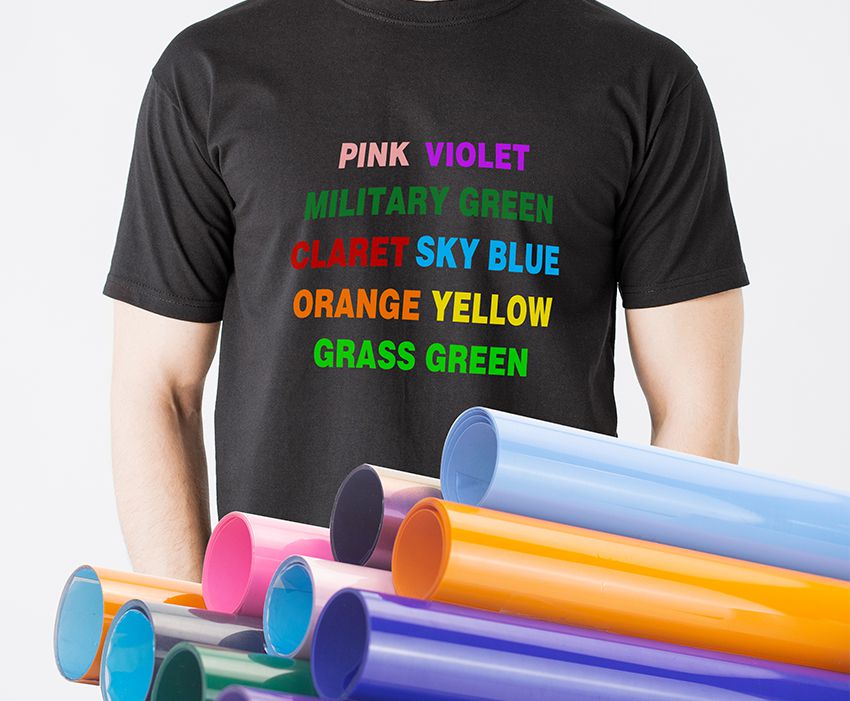
You can use heat transfer vinyl on almost any fabric on the market. HTV is often used to print sports jerseys, workwear like work pants, and thick cotton T-shirts.
But it can also be used on everyday items! For example, your kids' backpacks, pencil cases, pillows, T-shirts, sweatshirts, socks... 🧦👕
The fabrics that aren't compatible with heat transfer vinyl are those with low heat resistance. HTV needs to be applied at around 150°C for 15 to 20 seconds to make sure the heat transfer vinyl adheres properly to the fabric.
2 - Where Can You Find a Heat Transfer Vinyl Printing Company? 🤔
These days, lots of custom apparel companies are popping up, and they're easy to find online, like KustomLab or Festi print.
However, these printers won't take small custom orders; they usually require a minimum of 10 pieces.
If you only want one or two pieces customized, I recommend reaching out to makers and creators on Instagram, who'll be happy to work on your project!
3 - Can You Apply Heat Transfer Vinyl Yourself?
It's absolutely possible to customize fabric with HTV yourself. However, if you want to do it professionally, you'll need to invest a certain budget in machines and accessories to get started with heat transfer vinyl.💰
One of the advantages of HTV is its low startup cost. That makes it one of the least expensive techniques on the textile printing market, by far. Here's the equipment you need to get started:
a - A Cutting Machine:
Good-quality cutting machines start at 300€. If you're thinking about getting into custom apparel, we recommend the Silhouette Cameo, a safe bet.
b - Heat Transfer Vinyl:
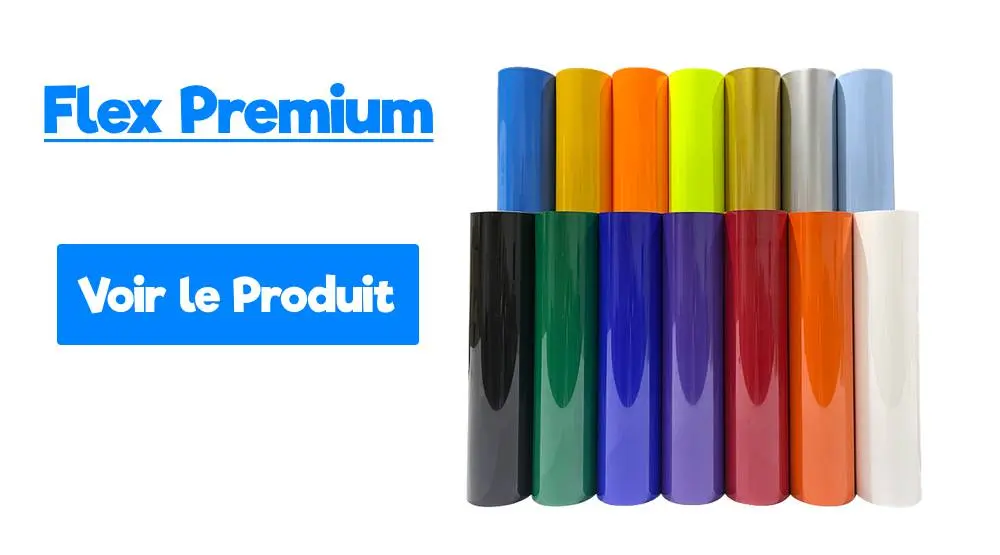
As we mentioned, heat transfer vinyl is the material you'll use to decorate fabric.
Heat transfer vinyl is the key element of this technique, allowing you to create designs to customize your T-shirts with logos that reflect your style.
Our company, Transfer Paper, has been supplying heat transfer vinyl since 2019, and every month we help several hundred individuals, creators, and businesses customize fabric with HTV.
You can check out our heat transfer vinyl shop right here ⬅️.
c - An Iron or a Heat Press
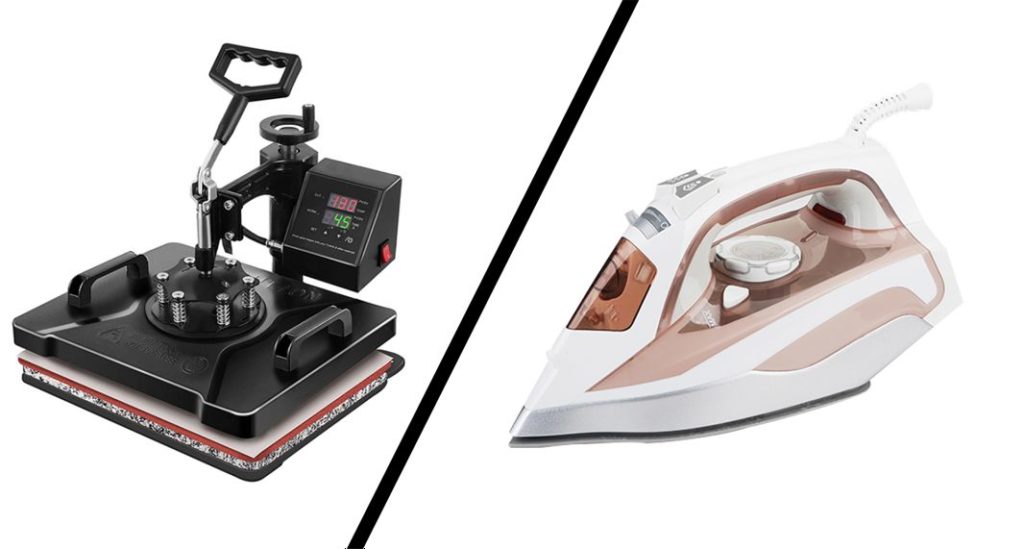
Finally, you'll need a heat press to apply your design to fabric. That's because heat transfer vinyl can only bond to fabric when it's pressed at a high temperature (around 150°C).
TIPS AND TRICKS: You don't need a heat press when you're just starting out with HTV. An iron will do the job perfectly and help you save a little money.
If you start going pro and selling your custom creations, that's when I'd recommend investing in a heat press, which will come in very handy. ✅
Now let's go over the pros and cons of heat transfer vinyl to help you decide whether this printing technique is right for you:
4 - Pros and Cons of Heat Transfer Vinyl on Fabric
a - The Cons of HTV:
❌ If you sell custom T-shirts in large quantities (50 or more T-shirts a day), the customization process may take you longer than other printing methods.
❌ Heat transfer vinyl isn't recommended for very detailed designs (details around 1mm) because cutting precision could suffer.
❌ Color gradients are hard to achieve (to create color gradients with HTV, you need printable HTV and an expensive machine.)
b - The Pros, or Why Is Heat Transfer Vinyl an Excellent Fabric Printing Method?
✔️ A Versatile Printing Method
The range of heat transfer vinyl is incredibly varied, so you can create original fabric prints. For example, there's standard solid HTV, glitter HTV, holographic HTV, velvet HTV, and even 3D HTV.
You can also create logos with a color gradient using HTV, but you'll need an eco-solvent ink printer (which is an expensive machine) and a special vinyl called printable HTV to print on.
✔️ Heat Transfer Vinyl Holds Up Well in the Wash
Some people claim that heat transfer vinyl doesn't hold up in the wash.
This misconception is sometimes based on an unfair comparison between HTV and other methods like sublimation or screen-printed transfers.
In many cases, the HTV application instructions weren't followed correctly, resulting in a poorly applied design.
In reality, quality HTV on fabric can withstand more than 60 washes at 30°C without any damage to the logo. Since HTV is a flexible material, the risk of your logos tearing is minimal.
✔️ Price Matters 🤑
HTV printing is one of the most affordable printing techniques if you want to start your own custom apparel business.
You'll need to buy a cutting machine and heat transfer vinyl, and if you already have an iron, you don't even need to order a heat press right away.
That way, you can get started with HTV customization with about 400€ in your pocket.
✔️ Fast for Small Runs ⏩
Heat transfer vinyl is a fast printing method when you're customizing small quantities of fabric items.
✔️ The Colors Are Vibrant ✨
Unlike DTG digital printing, which gives a fairly dull result on fabric, HTV designs have vivid, vibrant colors.
All these factors (pros and cons) should be taken into account when you want to customize your own clothes. As you've seen, heat transfer vinyl is an excellent way to get started with fabric customization.
To wrap up this article, we'll walk you through the steps for creating an HTV design and applying it to your garment.
5 - How Do You Apply Heat Transfer Vinyl?
1️⃣ First, take a roll of heat transfer vinyl and load it into your cutting machine. You should have already created a logo and imported it into the machine's software. We won't go through the entire process here, but you can check out our article "How to Apply Heat Transfer Vinyl to Fabric Like a Pro," which covers the steps in depth.
2️⃣ Once the machine is ready, it will start cutting the heat transfer vinyl, following the design you set up in the software.
3️⃣ Once the design is cut, it's time for weeding (weeding means removing the excess heat transfer vinyl. It may sound abstract, but it's a very simple step. Here's a video). Once that's done, you'll have a real HTV design in your hands, ready to be pressed onto the fabric.
4️⃣ Grab the fabric item of your choice and a heat press or an iron. Place the design and press it onto the fabric at 150°C for 20 seconds. And there you have it, your first HTV design!
That brings our blog post to a close. You now know a bit more about what heat transfer vinyl printing is, and I hope you feel up to speed on the subject! If you'd like to get started with HTV and have any questions, feel free to email me at contact@papier-transfert.fr.
You can also visit our heat transfer vinyl shop to create high-quality, wash-resistant HTV designs on your fabric items!


Comments
No comments yet. Be the first to share your experience.
Leave a comment