There are 4 main printing methods on the market when you want to print on fabric. Today, we're going to look at the pros and cons of each of these techniques.
Screen Printing
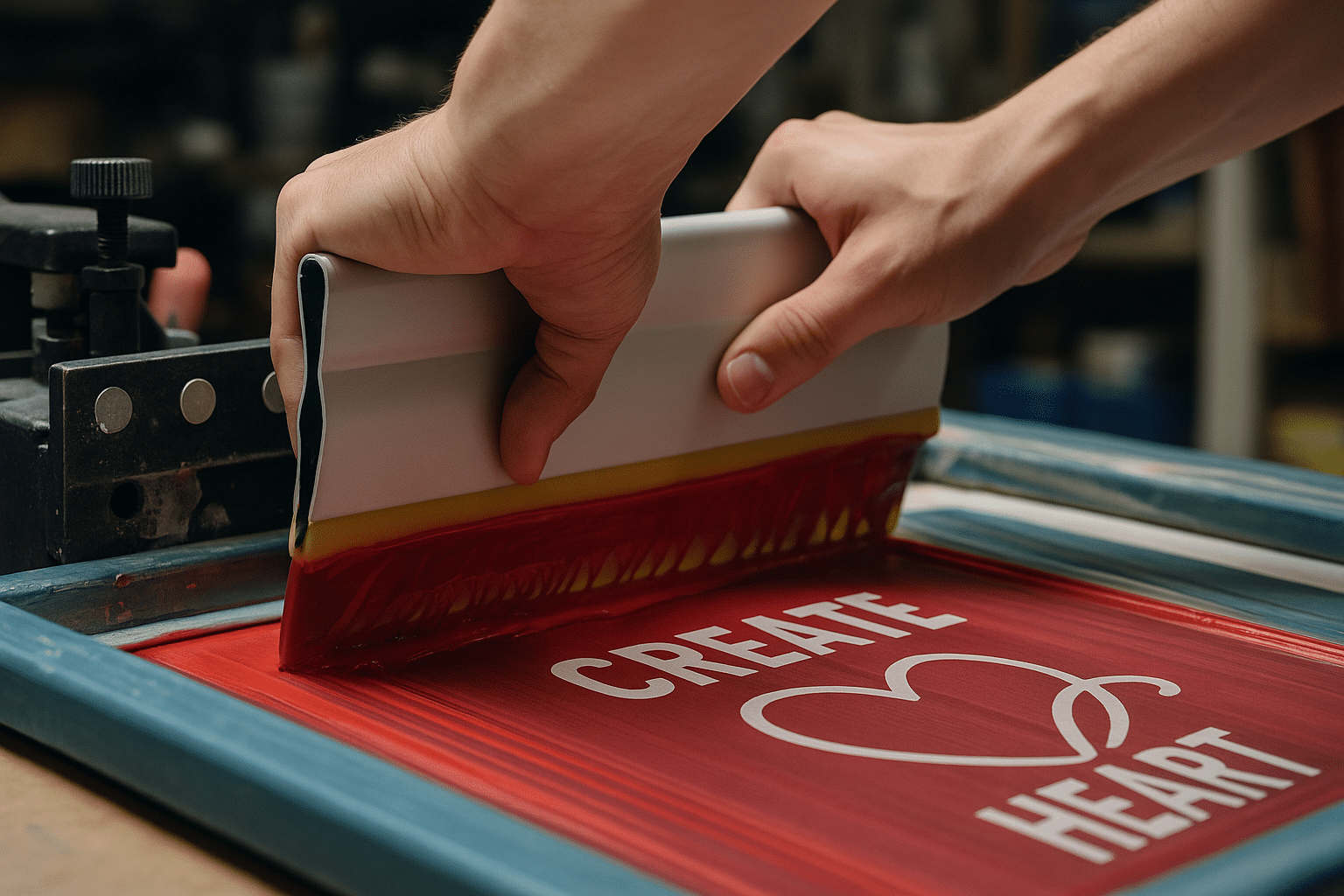
Screen printing is a textile printing method that uses screens to create a design. The fabric is placed under the screen, and then textile ink is applied to the frame with a squeegee (you have to press firmly against the fabric). With screen printing, you can only print one color of the design at a time (so a multicolor logo takes longer).
To add a new color, you'll need to use a new frame or clean the one you just used.
Since you can't create color gradients with this type of printing, we recommend using screen printing for designs with 2 to 4 colors max.
Screen printing holds up well over time, because the ink is anchored into the fabric.
It's a great method for designs with small details.
Pros
✔️ Long-lasting
✔️ Beautiful print quality
✔️ Ideal for large quantities of garments with the same design.
Cons
❌ Can't create color gradients.
❌ Expensive for small print runs
❌ Time-consuming printing process
How Do You Get Started with Screen Printing?
Lisoni is a brand that sells kits so you can get started with screen printing with total peace of mind.
Digital Textile Printing
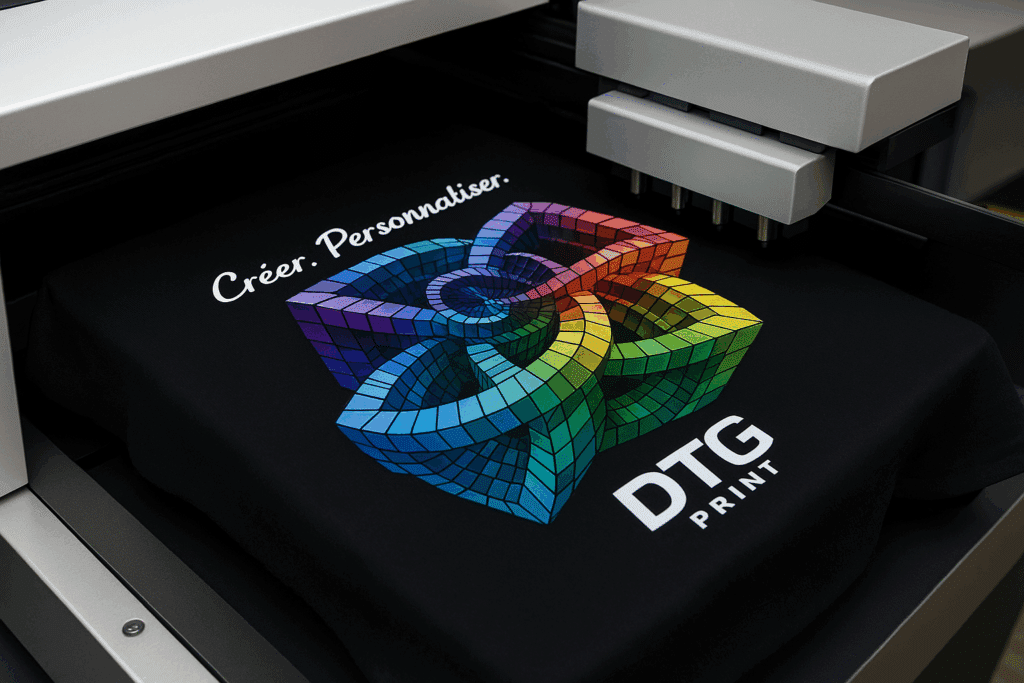
DTG digital printing (Direct To Garment) is done with a special printer and water-based ink.
Designs are printed straight from the computer file onto a garment or a roll of fabric, just like your home printer prints on paper.
Finally, the design is heat set (meaning you press it with a heat press once it's on the fabric)
Pros
✔️ Allows color gradients
✔️ Textile printing anchored into the fabric, so it's long-lasting
✔️ Very fast process
✔️ Easy to print fine details
Cons
❌ Dull colors
❌ The machine needs regular maintenance (otherwise the ink dries out)
❌ Requires costly pretreatment on dark fabrics
❌ DTG machines are expensive to buy (800€ to 10000€)
How Do You Get Started with Digital Printing?
Most textile printers offer DTG printing with good value for money.
Embroidery
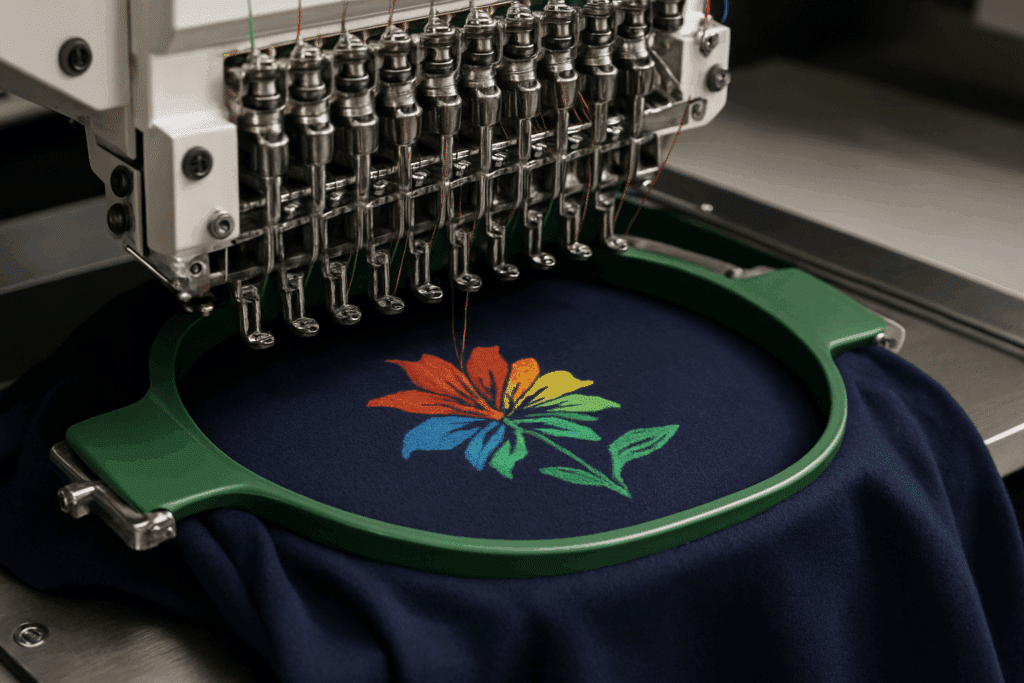
Machine embroidery is a very well-known process: using a needle and thread, the machine stitches into the fabric to create the design.
Embroidery is ideal for creating logos on thicker garments, like a polo shirt or a sweater. On clothing, it's the most durable decoration method.
Embroidery can cost more than traditional printing, but its longevity makes it worth the investment.
Not every design is suited to embroidery, so keep that in mind.
Pros
✔️ The highest-quality, most durable decoration process
✔️ Looks beautiful
✔️ Pleasing texture
Cons
❌ Very long production time per garment (it can take more than 2 hours!)
❌ Expensive machine (between 1000€ and 50000€)
❌ Expensive software (≃ 1000€)
❌ Hard to embroider on thin fabrics
❌ Can't reproduce designs with small details
How Do You Get Started with Embroidery?
Entry-level computerized embroidery machines like the BROTHER Innovis M240ED are perfect as a first embroidery machine.
Heat Transfer Vinyl
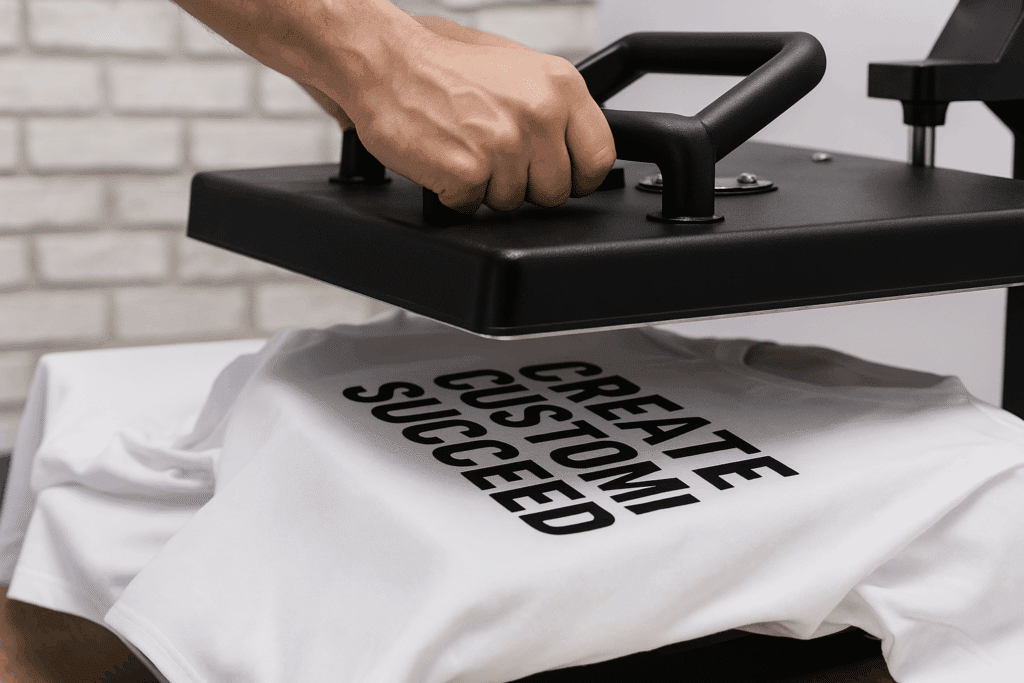
Heat transfer vinyl is the simplest and most affordable way to create textile prints.
Using a cutting machine, you cut the design you want from a roll of vinyl.
Once the design is cut, you move on to weeding to remove the excess vinyl from the roll.
Finally, the design is pressed onto the fabric with a heat press.
Pros
✔️ Simple, fast process for small runs.
✔️ Vibrant colors
✔️ Despite what people say, quality heat transfer vinyl is very durable over time.
✔️ There's a wide range of vinyl options that other printing methods don't offer (3D, glitter, velvet, and more).
✔️ Affordable printing method.
✔️Ideal for starting your own textile printing business
Cons
❌ Not recommended for highly detailed designs
❌ Color gradients are hard to achieve (to create gradients with heat transfer vinyl, you need printable HTV and an expensive machine.)
❌ Weeding takes a long time for large runs
❌ Designs can't have many colors (around 4 max)
How Do You Get Started with Heat Transfer Vinyl?
For a cutting machine, we recommend the Silhouette Cameo 5, which gives you lots of flexibility at a good price.
For the rolls of heat transfer vinyl you'll transfer onto your fabric, we recommend checking out our heat transfer vinyl collection!
Comments
No comments yet. Be the first to share your experience.
Leave a comment