Wenn du Textilien bedrucken möchtest, gibt es auf dem Markt 4 Druckverfahren, an denen man nicht vorbeikommt. Heute schauen wir uns die Vor- und Nachteile all dieser Techniken genauer an.
Siebdruck
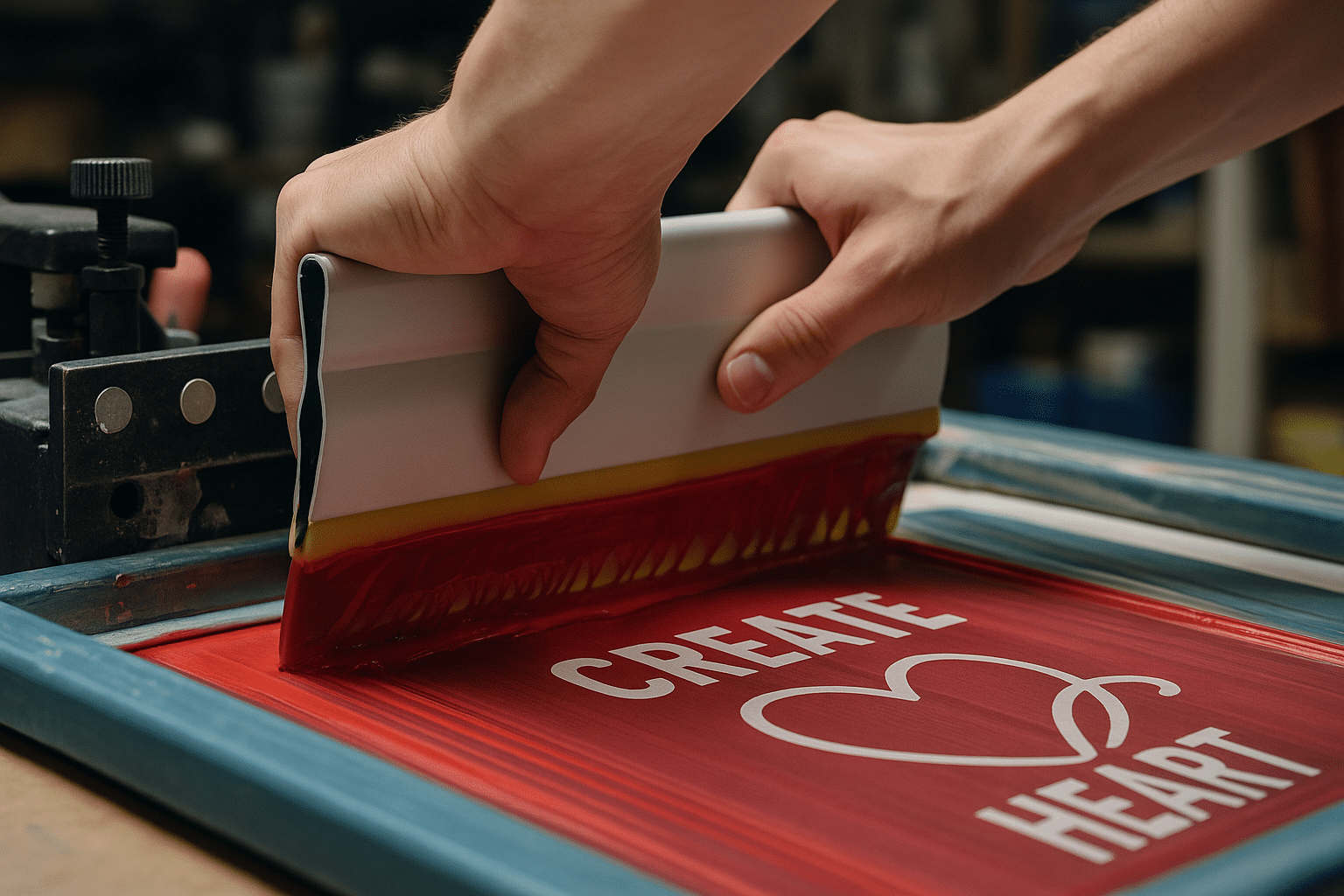
Der Siebdruck ist ein Verfahren des Textildrucks, bei dem mit Sieben ein Motiv erzeugt wird. Der Stoff liegt dabei unter dem Siebdrucksieb. Anschließend wird die Textilfarbe mit einer Rakel auf den Rahmen aufgetragen (dabei muss man fest auf den Stoff drücken). Beim Siebdruck lässt sich immer nur eine Farbe des Motivs auf einmal drucken (ein mehrfarbiges Logo dauert also länger).
Für jede neue Farbe brauchst du einen neuen Rahmen oder musst den zuvor benutzten reinigen.
Da mit diesem Druckverfahren keine Farbverläufe möglich sind, empfehlen wir dir den Siebdruck für Motive mit höchstens 2 bis 4 Farben.
Siebdruck auf Textilien ist sehr langlebig, weil die Farbe fest im Stoff verankert ist.
Für Motive mit kleinen Details ist diese Methode perfekt.
Vorteile
✔️ Langlebig
✔️ Sehr schöne Druckqualität
✔️ Ideal für große Mengen an Textilien mit demselben Motiv.
Nachteile
❌ Keine Farbverläufe möglich.
❌ Teuer, wenn nur wenige Textilien bedruckt werden sollen
❌ Zeitaufwendiger Druckvorgang
Wie steigst du in den Siebdruck ein?
Lisoni ist eine Marke, die Sets verkauft, mit denen du ganz entspannt in den Siebdruck einsteigen kannst.
Digitaler Textildruck
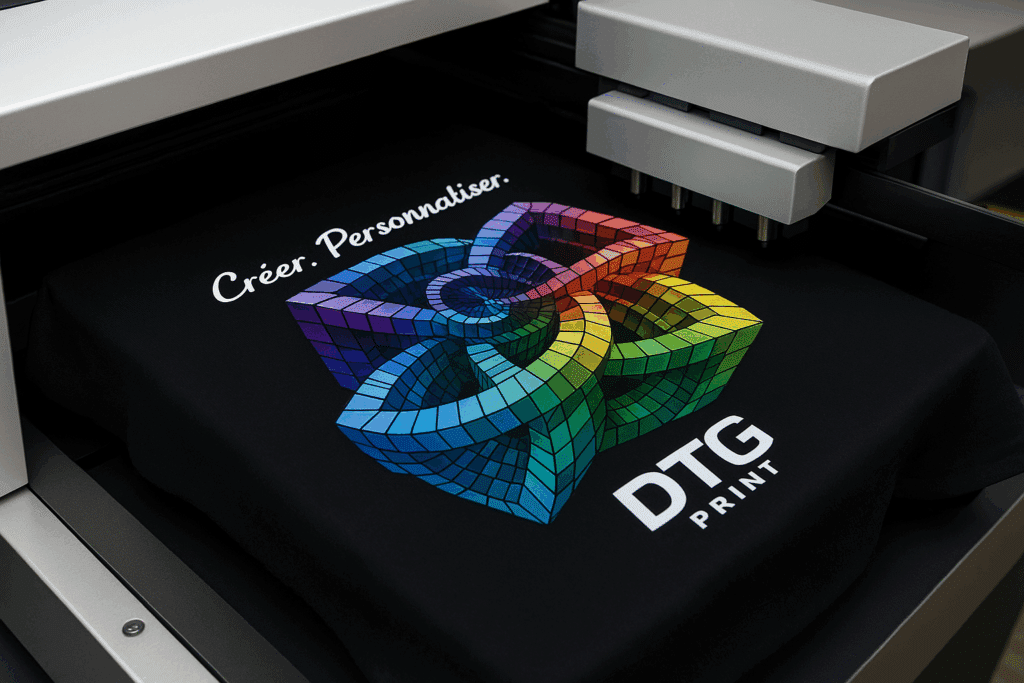
Der digitale DTG-Druck (englisch: Direct To Garment) erfolgt mit einem speziellen Drucker und wasserlöslicher Tinte.
Die Designs werden direkt aus der Computerdatei auf ein Kleidungsstück oder eine Stoffrolle gedruckt, genau so, wie dein Drucker zu Hause auf Papier druckt.
Zum Schluss wird der Druck thermofixiert (das heißt, das Motiv wird mit einer Transferpresse gepresst, sobald es auf dem Stoff ist).
Vorteile
✔️ Farbverläufe sind möglich
✔️ Textildruck, der im Stoff verankert und damit langlebig ist
✔️ Sehr schnelles Verfahren
✔️ Details lassen sich leicht umsetzen
Nachteile
❌ Blasse Farben
❌ Die Maschine muss regelmäßig gewartet werden (sonst trocknet die Tinte ein)
❌ Dunkle Textilien brauchen eine teure Vorbehandlung
❌ Eine DTG-Maschine ist teuer in der Anschaffung (800 € bis 10000 €)
Wie steigst du in den Digitaldruck ein?
Die meisten Textildruckereien bieten DTG-Druck mit einem guten Preis-Leistungs-Verhältnis an.
Stickerei
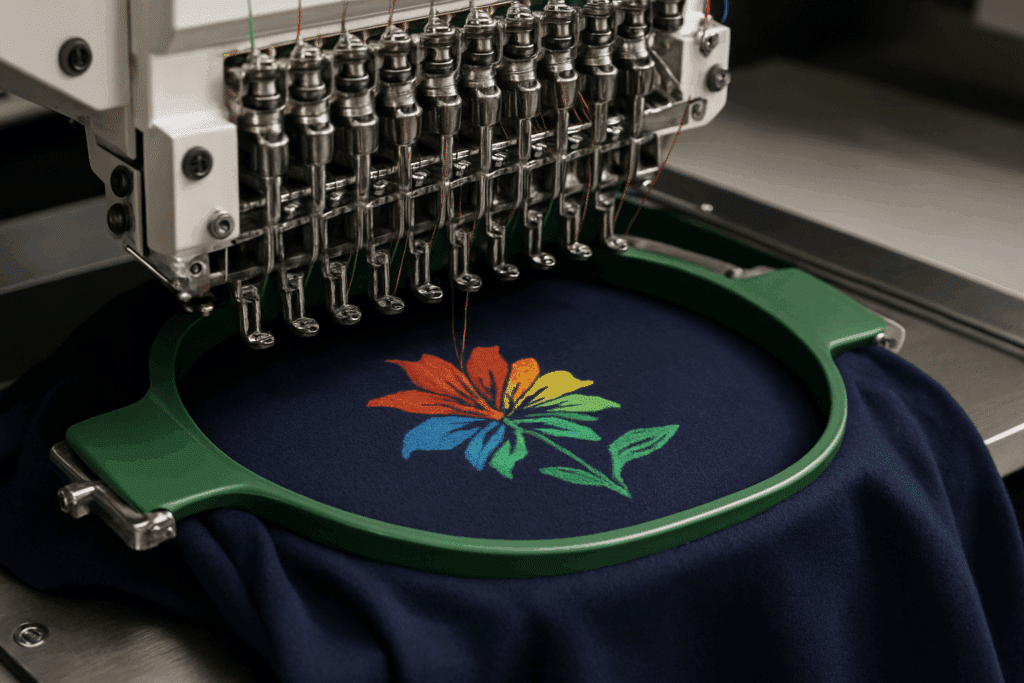
Wie Maschinenstickerei funktioniert, ist allgemein bekannt: Mit Nadel und Faden setzt die Maschine Stiche in den Stoff und erzeugt so das gewünschte Motiv.
Stickerei ist ideal für Logos auf etwas dickeren Kleidungsstücken wie Poloshirts oder Pullovern. Auf Kleidung ist sie das widerstandsfähigste Verfahren.
Stickerei kann teurer sein als herkömmlicher Druck, aber weil sie so langlebig ist, lohnt sie sich.
Nicht jedes Motiv eignet sich zum Sticken, das solltest du also berücksichtigen.
Vorteile
✔️ Das hochwertigste und langlebigste Verfahren
✔️ Sehr schön
✔️ Angenehme Haptik
Nachteile
❌ Sehr lange Bearbeitungszeit pro Textil (kann über 2 Stunden dauern!)
❌ Teure Maschine (zwischen 1000 € und 50000 €)
❌ Teure Software (≃ 1000 €)
❌ Dünne Textilien lassen sich nur schwer besticken
❌ Motive mit kleinen Details können nicht gestickt werden
Wie steigst du ins Sticken ein?
Günstige digitale Stickmaschinen wie die BROTHER Innovis M240ED sind perfekt als erste Stickmaschine.
Flexdruck
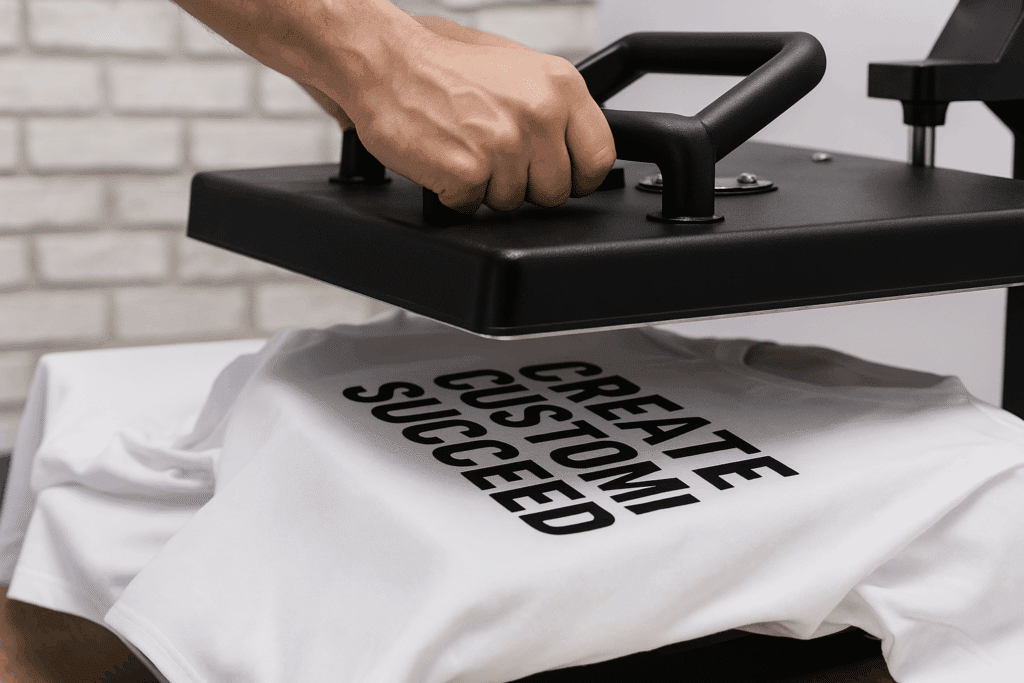
Flexdruck ist die einfachste und günstigste Methode, um Textilien zu bedrucken.
Mit einem Schneideplotter schneidest du das gewünschte Motiv aus einer Rolle Flexfolie aus.
Ist das Motiv geschnitten, folgt das Entgittern: Dabei entfernst du die überschüssige Folie von der Rolle.
Zum Schluss wird das Motiv mit einer Transferpresse auf das Textil gepresst.
Vorteile
✔️ Einfaches und schnelles Verfahren für kleine Serien.
✔️ Leuchtende Farben
✔️ Anders als oft behauptet, ist hochwertiger Flexdruck sehr langlebig.
✔️ Es gibt unzählige Flexfolien-Varianten, die andere Druckverfahren nicht bieten (3D-Effekt, Glitzer, Samtoptik …).
✔️ Günstiges Druckverfahren.
✔️ Ideal, um ein eigenes Textildruck-Business zu starten
Nachteile
❌ Nicht empfehlenswert für sehr detailreiche Motive
❌ Farbverläufe kaum umsetzbar (dafür brauchst du bedruckbare Flexfolie und eine teure Maschine.)
❌ Entgittern dauert bei großen Serien lange
❌ Das Motiv kann nicht viele Farben haben (etwa 4 maximal)
Wie steigst du in den Flexdruck ein?
Als Schneideplotter empfehlen wir dir die Silhouette Cameo 5, die dir zu einem guten Preis viel Freiheit bei der Nutzung bietet.
Für die Flexfolien, die auf das Textil übertragen werden, lohnt sich ein Blick auf unsere Flexfolien-Kollektion!

Kommentare
Noch keine Kommentare. Schreib den ersten und teile deine Erfahrung.
Kommentar schreiben