
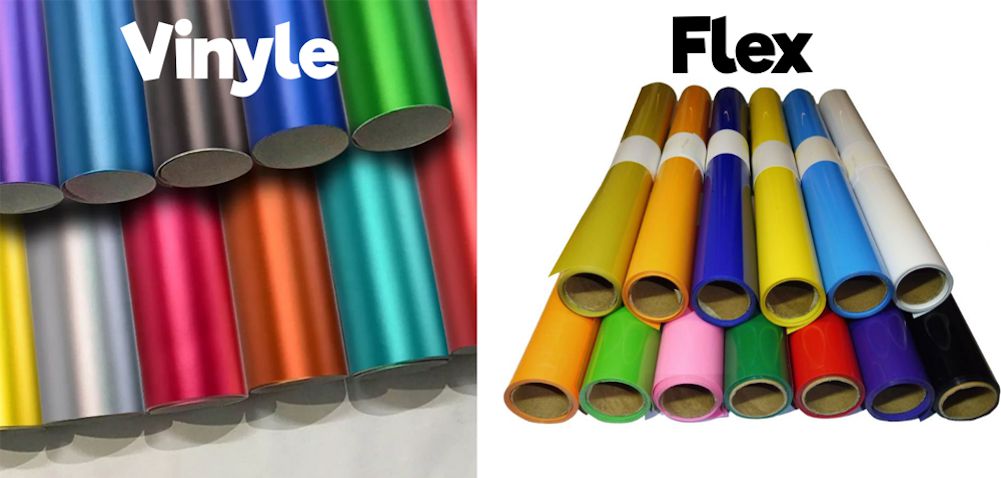
Although people often use the terms interchangeably, HTV (heat transfer vinyl) and adhesive vinyl are two completely different materials.
When you're getting started making custom apparel or personalized items, it's important to get this right.
At first, it's hard to tell the two apart, and plenty of people have bought heat transfer vinyl when they actually wanted adhesive vinyl, or vice versa!
So today, we're going to explain the difference between heat transfer vinyl and adhesive vinyl once and for all, so there's no more confusion!
Heat Transfer Vinyl
⚠️ Heads up: heat transfer vinyl goes by several names that can be confusing:
- In English, it's called HTV, short for heat transfer vinyl
- In French, heat transfer vinyl is sometimes called "vinyle de transfert de chaleur," a name that sounds very close to "vinyle adhésif" (adhesive vinyl), which is why we prefer the term "flex thermocollant"
What Is It Used For?
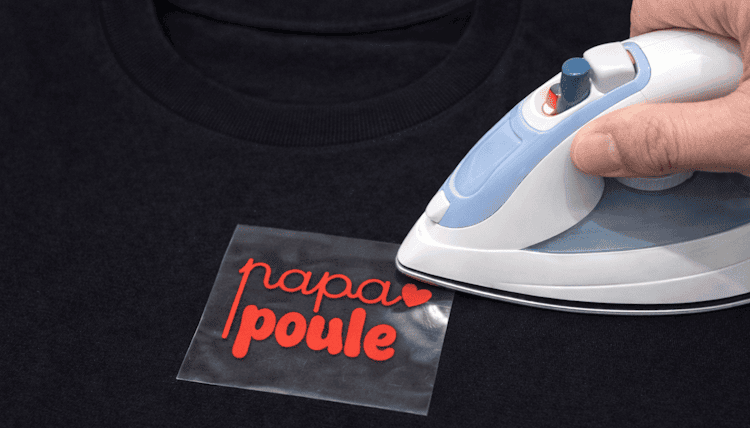
Heat transfer vinyl is used to personalize all kinds of fabric items, like towels, T-shirts, and more.
The names and numbers on soccer jerseys are actually printed with HTV. 👕
It can be made of PVC or polyurethane. Polyurethane HTV is thinner and more flexible, while PVC HTV is a little thicker but perfectly suited to makers who want to get started with this activity.
With HTV, you can personalize your fabric items with logos, usually in 1 to 4 colors max. If your logo has a color gradient, you'll need to use "printable HTV" (we won't cover printable HTV in this article, but we've written a dedicated blog post about printable HTV.)
Some people launch a clothing brand by printing their apparel with heat transfer vinyl, while others offer custom personalization on demand. And most people do it as a hobby, so it's up to you to choose what you want to do with it!
There's a wide range of HTV types on the market, including glitter HTV, velvet HTV, 3D HTV, and more.
How Do You Use It?
Heat transfer vinyl needs to be heated to bond to fabric, but there are a few steps to follow first.
To start, you'll need a cutting machine to cut your design out of the HTV.
Once you've cut out your logo, place it on the fabric item you want to personalize. Finally, press the logo onto the fabric with an iron or a heat press at an average temperature of 150°C.
Our blog post "How to Apply Heat Transfer Vinyl to Fabric Like a Pro" explains all the techniques in detail so you can become an expert! 😉
Adhesive Vinyl

Adhesive vinyl is also known as sticker vinyl or self-adhesive vinyl.
It's used on flat, hard surfaces like windows, mugs, or water bottles.
Just like HTV, adhesive vinyl comes in lots of colors and can have a matte or glossy finish.
Unlike HTV, it doesn't need heat to stick, since it already has an adhesive surface that lets you apply it to any hard object. ✅
How Do You Use It?
The process starts out similar to HTV, since you'll need to cut your design with a cutting machine.
Next, apply transfer tape to your logo, then stick it onto the surface of your choice.
This video shows you exactly how to apply vinyl. (Example using the Silhouette Studio software)
How Can You Tell HTV and Adhesive Vinyl Apart?
Telling the two products apart before cutting is important so you know which one to use on which surface. Here's a tip to easily recognize them:
Look at the back of each roll. If the backing looks like cardstock and creases easily, it's a roll of adhesive vinyl. If the backing is clear plastic, it's a roll of HTV.
Where Can You Buy Heat Transfer Vinyl and Self-Adhesive Vinyl?
For a while now, the market has been flooded with HTV and vinyl. It's getting almost hard to find quality rolls at a good price.
That's why we offer heat transfer vinyl for fabric as well as adhesive vinyl, both of which are popular with the maker community!


Comments
No comments yet. Be the first to share your experience.
Leave a comment