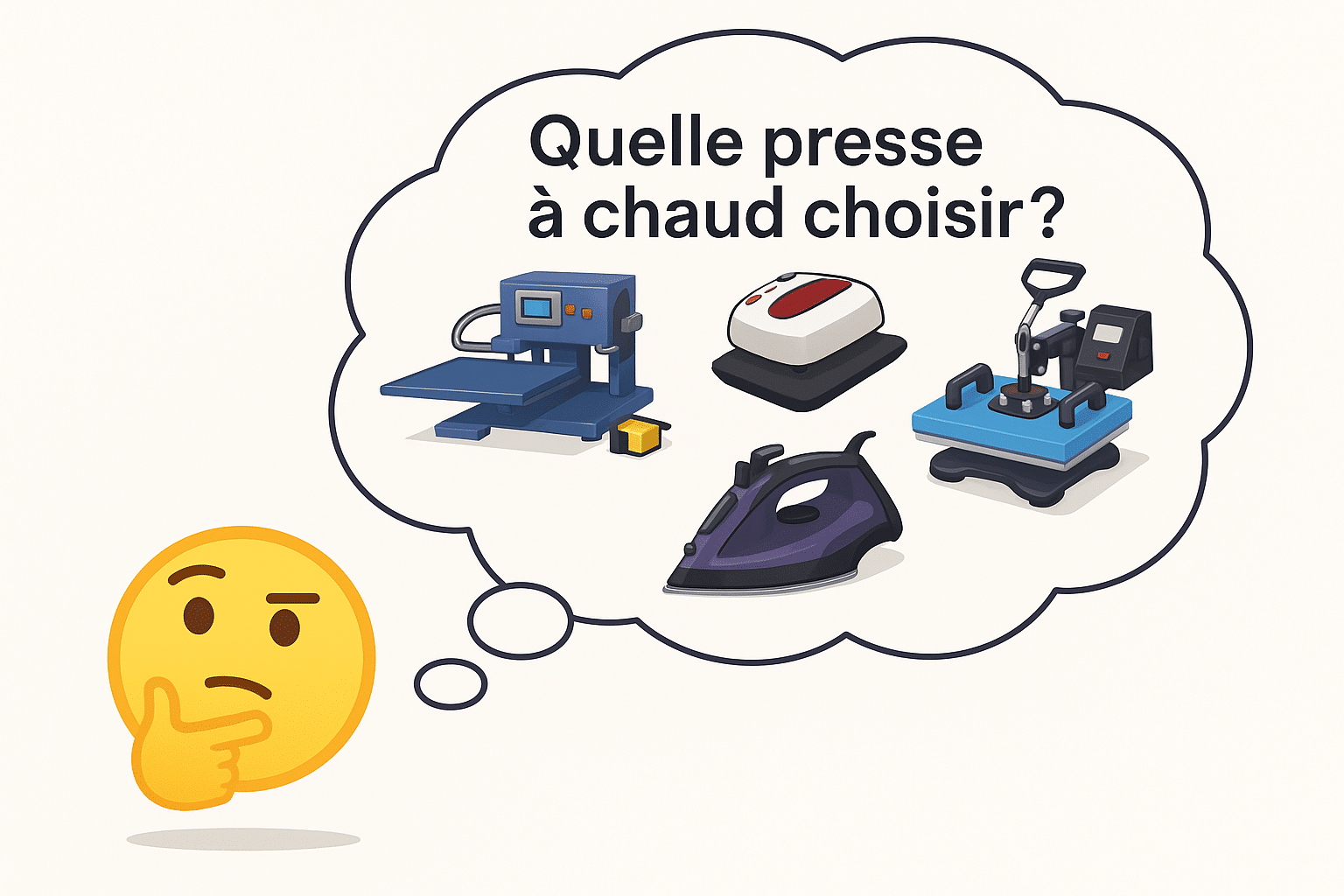
When you want to customize your own clothes with heat transfer vinyl, whether it's to make jerseys for your kids or to sell your creations, you need a heat press.
The problem is that there are tons of different types of heat presses online, so many that it's almost impossible to pick the one that's best for you. 😵
So we're going to share our tips and the keys to choosing the right textile heat press with the best value for money, one you'll be completely happy with! 👍
What Is a Heat Press for Textiles?
A heat press is a machine that lets you transfer designs onto different surfaces (mainly fabric) to customize them. The design is transferred using pressure and heat, hence the name heat press. 🥵
What Can You Do with a Heat Press? 🤔
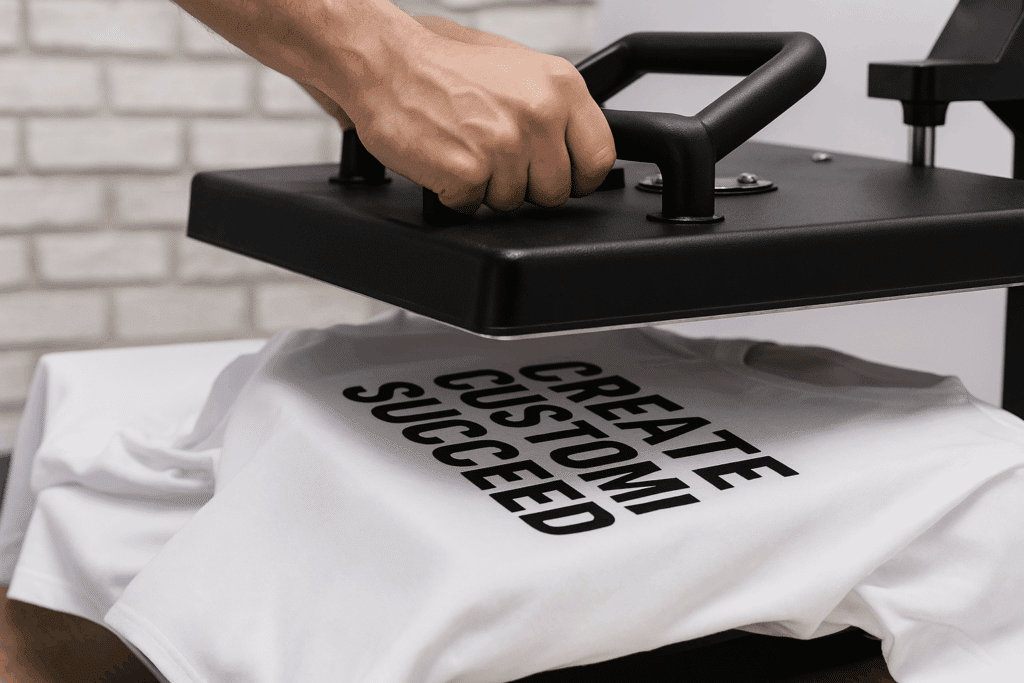
A heat press is a versatile tool you can use for several customization methods, on fabric as well as on other items. Here are the main customization techniques that require a heat press:
1 - Customizing with Heat Transfer Vinyl
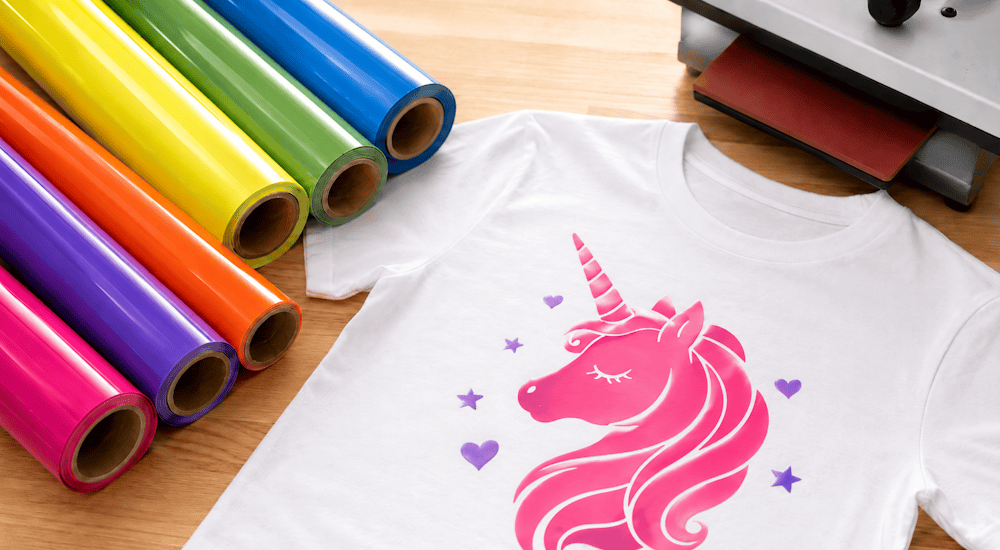
Heat transfer vinyl is the most popular and best-known fabric decoration technique when you want to use a heat press. It's actually the simplest method, and it offers excellent value for money. ✔️
Heat transfer vinyl usually comes in rolls. You cut your design out of it with a cutting machine, and that vinyl design is then transferred onto the fabric (with the heat press, of course).
2 - Customizing with Printable HTV
Printable HTV is also a heat transfer vinyl, except that it's "printable": you can print your design on it with eco-solvent ink, then cut it out and transfer it onto the fabric.
3 - Printing with a DTG Printer
When you use a DTG printer (direct-to-garment printing), you absolutely have to cure the ink after printing it on the fabric. And for that, nothing beats a heat press! 🤩
DTG printing gives high-quality results, but it requires very expensive equipment.
4 - Sublimation
Sublimation lets you transfer designs onto items such as phone cases. Just like with heat transfer vinyl, you need a heat press to transfer sublimation designs.
How Do You Use a Textile Heat Press?
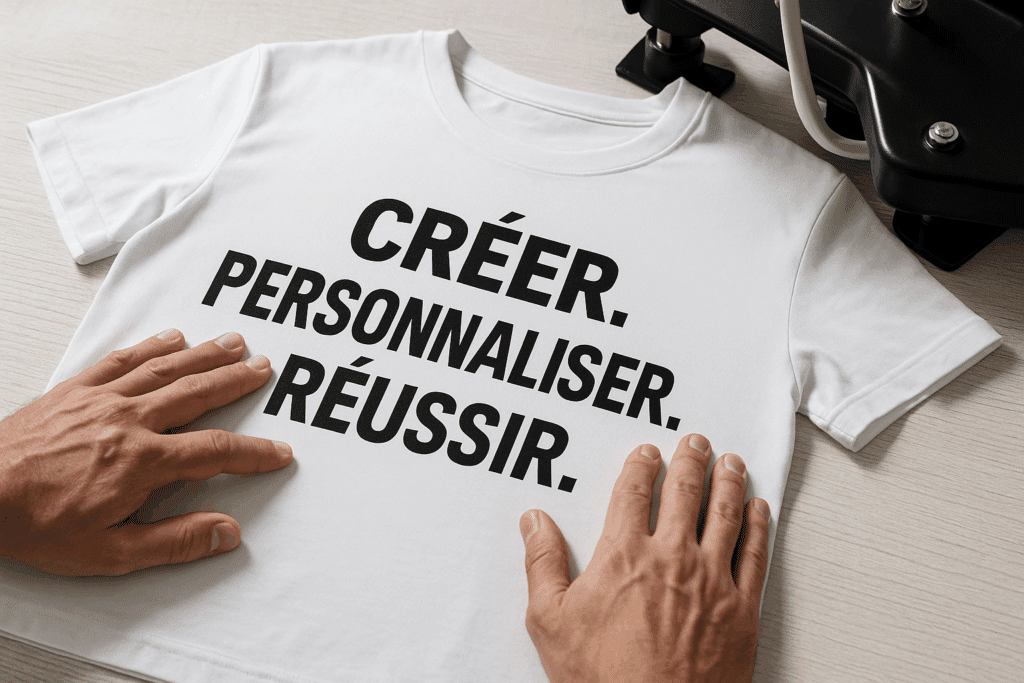
It all depends on the type of press you're using. Most heat presses have a lever you pull down to press your fabric, so we'll assume your press has an up-and-down lever too:
1️⃣ Preparation: First, set aside your garment and the HTV logo you want to apply, then turn on the machine. Make sure there's nothing flammable nearby and that the machine is out of your children's reach.
2️⃣ The display on your textile heat press shows the temperature and the heating time. Take the time to adjust these two settings so you're using the heat press correctly.
In general, when you want to customize your clothes with heat transfer vinyl, the temperature will be between 150 and 160°C and the pressing time between 15 and 25 seconds.
To cure a DTG ink logo, the temperature will be between 130 and 180°C and the heating time between 20 seconds and 1 minute.
3️⃣ Wait about ten minutes for the textile heat press to heat up. Make sure the lid of your heat press is fully open.
4️⃣ During those fifteen minutes, you can go ahead and place your T-shirt on the press. Most people use a ruler for this. You can also fold your T-shirt in half and unfold it to get a nice straight crease down the middle of the fabric, which will help you position your design.
5️⃣ Position your logo on the fabric and make sure it's perfectly straight, because once it's pressed, a vinyl design is very hard to remove, and that could leave a few scars on your poor T-shirt. 🤕
6️⃣ Once the textile heat press has reached the right temperature and the logo is in place, pull down the lever and wait for the set time.
When the time is up, your heat press will beep. Lift the lever, and your customization is a success! 🤩
Key Criteria for Choosing a Heat Press
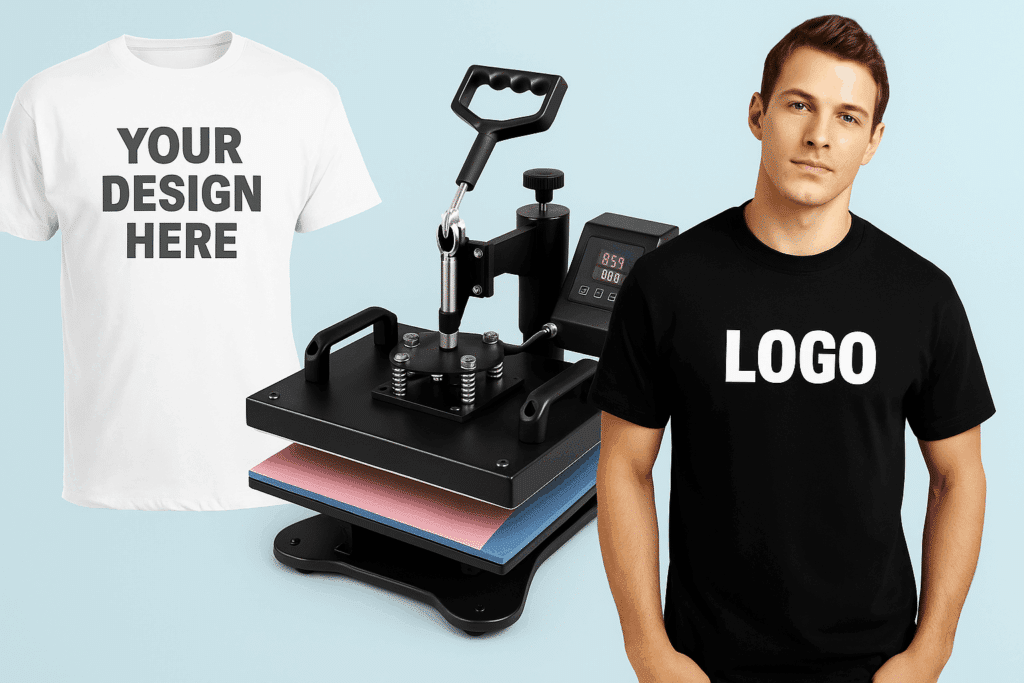
Buying a textile heat press isn't something to do on a whim. First and foremost, you need to know which criteria matter to you so you can choose the right press. Here are the 4 key criteria you absolutely need to know before buying a heat press for textiles 👕:
a - Pressure:
Pressure is a key factor when buying a heat press, because if your textile heat press doesn't apply enough pressure, the vinyl won't transfer properly.
With lever heat presses, you don't need to worry about this, because they're designed to apply pressure to the fabric.
However, machines like the Cricut EasyPress apply almost no pressure to the fabric (this is one of the reasons I generally don't recommend this machine despite its great quality, but we'll come back to that later in this post).
b - The Lifespan of the Textile Heat Press:
How long your heat press lasts is one of the most important factors.
To make sure a heat press will stand the test of time, I recommend checking the machine's warranty and choosing machines with a warranty of 1 year or more.
Above all, you also need to consider how many prints you've been able to make with it. If you've had a textile heat press for a year but have only pressed 10 designs with it, that doesn't count. 🤷♂️
So do your research by reading the reviews on the website or from the seller. It's a good way to learn more about the quality of the heat transfer machine.
Finally, it's obvious that a 100 euro machine won't last as long as a 2000 euro machine, but I can assure you that a small, inexpensive textile heat press can easily last more than 3 years with steady use!
c - The Size of the Machine
The size of the machine matters when you want to press large logos, for example on the back of your T-shirt.
For that, keep in mind that a logo on the back of a T-shirt usually measures 25x25cm and can even go up to 30cm x 30cm.
If you don't plan on making large logos, you won't need a big machine. Plus, it's possible to apply vinyl logos that are larger than your machine itself. Just press your logo several times so it's transferred across the whole garment. 👕
d - Price 🤑
Price is one of the most important criteria when choosing your press.
That said, I'd advise you not to focus only on the price of the textile heat press, but rather to look at its price in terms of how many items you need to customize before it pays for itself.
For example:
If you sell T-shirts for 20 euros each, your total production cost per T-shirt is 5 euros, and your heat press costs 300 euros, you'll need to sell 20 T-shirts for your machine to pay for itself, because:
15 euros (profit per T-shirt) x 20 (number of T-shirts to sell) = 300
Machines for Customizing Fabric with Heat Transfer Vinyl:
Now let's look at several types of machines and presses that let you customize fabric with HTV. We'll also see who each machine we cover is aimed at (professionals, hobbyists, and so on), and finally, we'll give each one a score based on the 4 criteria we defined above. 💯
1 - The Iron
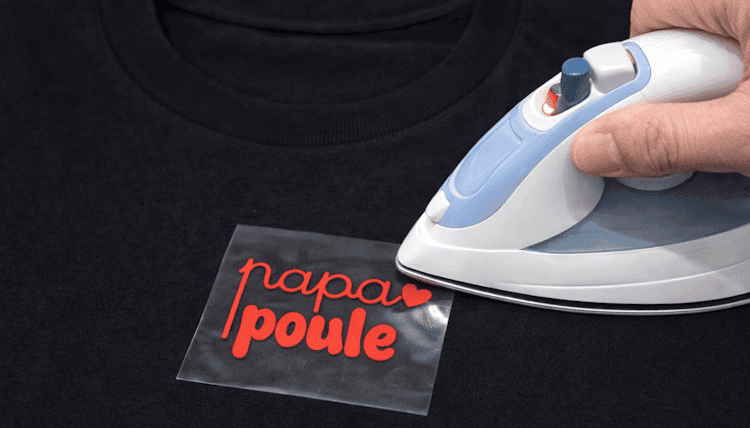
We all have a steam iron at home, and this wonderful tool can come in very handy when you're just getting started with heat transfer vinyl customization.
An iron isn't really designed for heat transfer vinyl. You need to push down on your iron to press your designs, and applying too much pressure over and over can damage it.
Irons have adjustable heat settings, which makes them useful for HTV. Still, be careful, because some irons don't clearly show the temperature in degrees. 🌡️
When you use an iron to press your heat transfer vinyl design, you have to push down on it and apply strong pressure (pressure being an important factor for HTV). Over time, your little iron may get damaged from all that pressure. Plus, if you start selling more and more custom items, your shoulder will start to ache from all that pressing with the iron.
In short, when you're just starting out, you don't necessarily need a textile heat press. At first, I'd recommend using the iron you already have at home, which will do the job. Once you start regularly making HTV designs, switch to a textile heat press without waiting too long. 😉
Warning: when you use an iron for heat transfer vinyl, be very careful with your hands, because an iron is made for IRONING, not for pressing designs onto fabric.
⭐ OUR SCORE:
Pressure: 1/5
Lifespan: 2/5
Size: 2/5
Price: 5/5
Total: 10/20
2 - Textile Heat Presses:
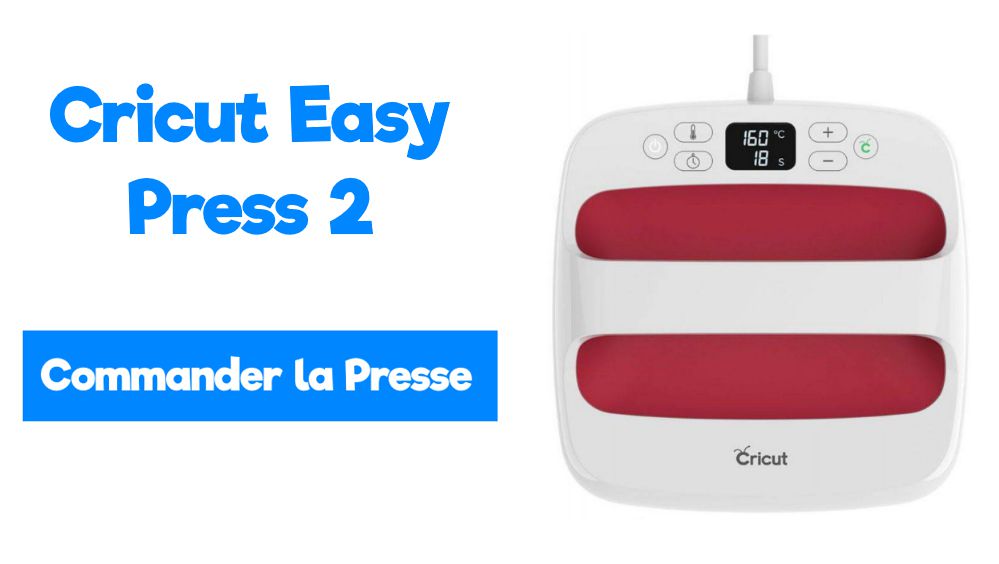
The Cricut EasyPress 2:
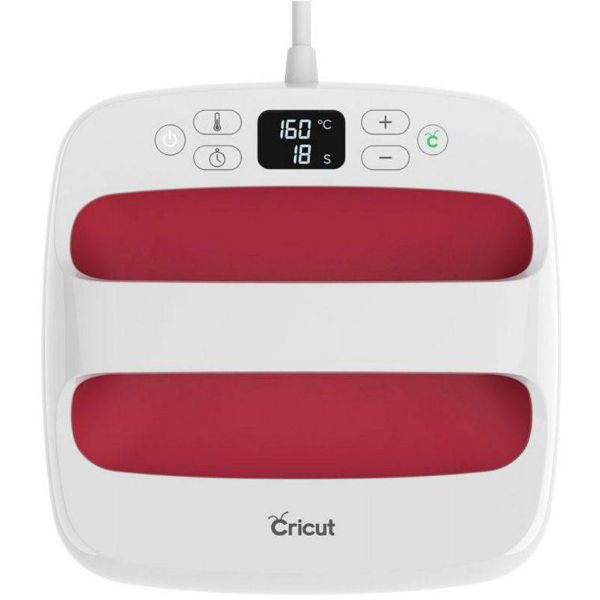
The Cricut EasyPress 2 is mostly used by professional crafters, entrepreneurs, or hobbyists who want to customize items one at a time.
Cricut is an outstanding brand that offers not only attractive-looking products but also great quality. That said, it's worth pointing out that because of the brand's reputation, Cricut tools and machines are sold at slightly higher prices.
The Cricut warranty is at least 1 year, and given the product's quality and positive reviews, it certainly seems able to last several years.
The size of the Cricut EasyPress 2 is also perfect (30cm x 25cm, which is ideal for making good-sized HTV logos).
But here's the catch: in my opinion, the Cricut EasyPress has one major problem, and that's its lack of pressure during the vinyl transfer. If you use the Cricut EasyPress 2, you'll have to apply the pressure yourself (using your own body weight) so the vinyl sticks properly to the fabric.
⭐ OUR SCORE:
Pressure: 2/5
Lifespan: 4/5
Size: 4/5
Price: 3/5
Total: 13/20
The Clamshell Heat Press:
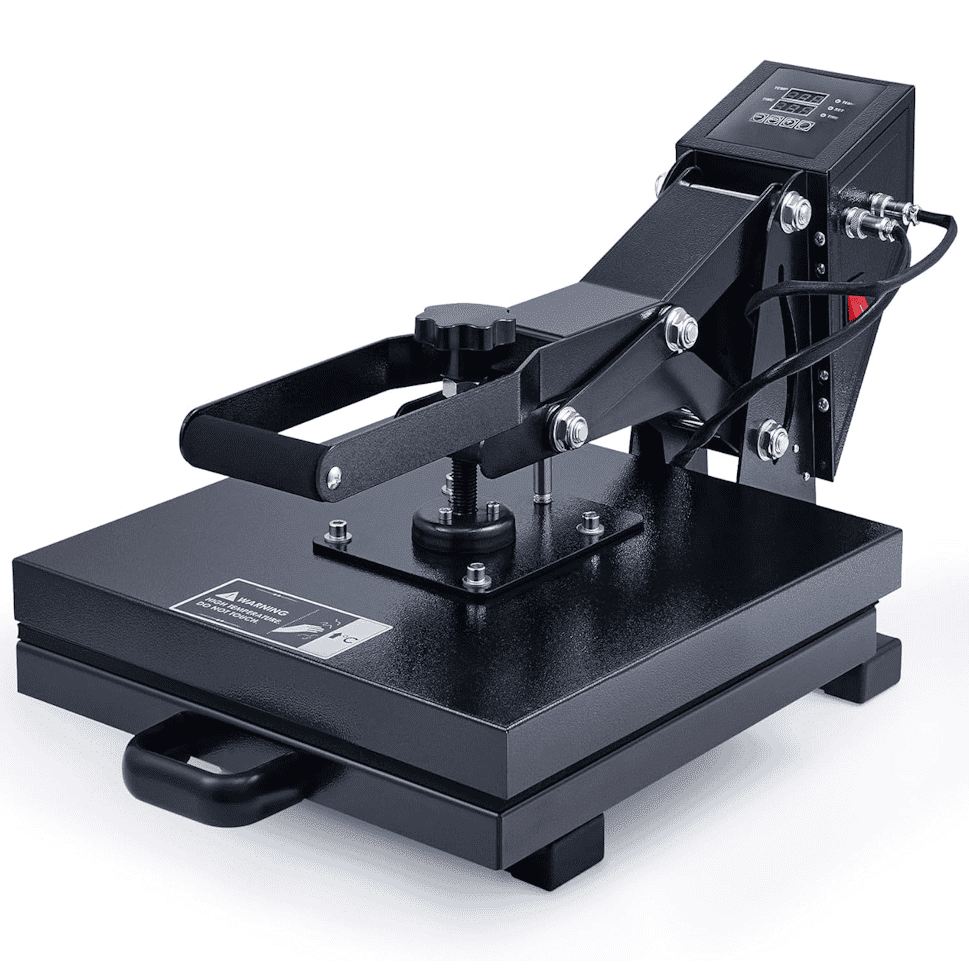
This textile heat press measures 38cm x 38cm, so it's perfect for making large designs on the back of your T-shirts and sweatshirts.
As for pressure, a knob on the back of the press lets you adjust it. Be careful not to apply too much or too little pressure when pressing your logo.
At around 200 euros in total, this press offers excellent value for money. 💸
⭐ OUR SCORE:
Pressure: 3/5
Lifespan: 3/5
Size: 4/5
Price: 5/5
Total: 16/20
The Automatic Heat Press:
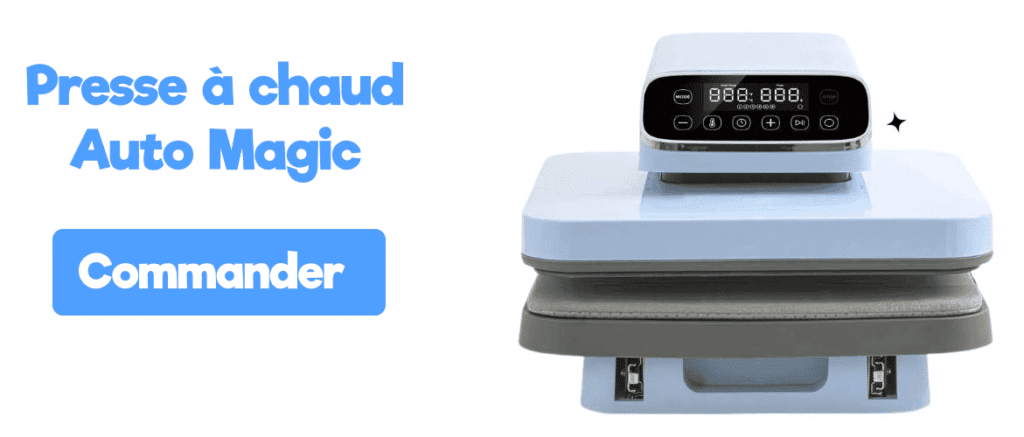
This automatic heat press is ideal for saving time and getting more consistent transfers. Unlike manual models, the AutoMagic heat press applies the pressure and opens automatically, which reduces the risk of mistakes and lets you work more comfortably, especially during long pressing sessions.
With its 38 cm x 38 cm platen, it's perfect for large designs on T-shirts, sweatshirts, tote bags, or even larger garments like jackets. The pressure is easy to adjust, and its automatic system always ensures even pressure across the entire print area.
It's an excellent choice for regular crafters, small businesses, or anyone who wants to enjoy a more comfortable way of working without investing in a professional machine costing several thousand euros.
⭐ OUR SCORE:
-
Pressure: 5/5
-
Lifespan: 4/5
-
Size: 4/5
-
Price: 3/5
Total: 16/20
The Professional Heat Press:
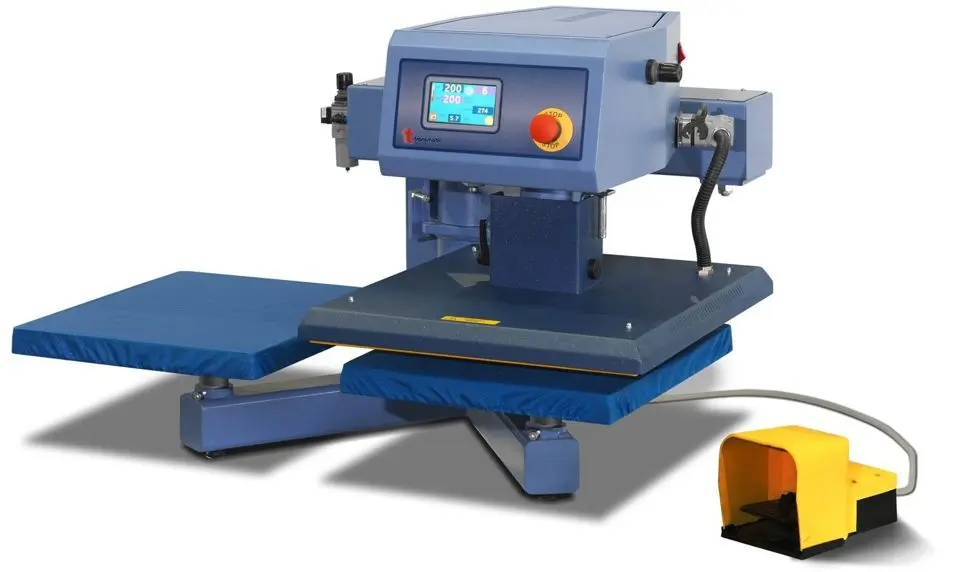
Professional textile heat presses are mainly used by custom apparel companies that decorate more than a hundred garments a day.
Their quality is excellent in every way, but they're very expensive. For example, the Transmatic REV S press is an excellent heat press, and it costs over 4000 euros.
It's up to you to decide whether you're ready to invest that kind of budget in a heat press. Still, I'd advise against jumping straight to a professional press if you're a beginner.
Start by getting the hang of it with a less expensive heat press that can deliver exactly the same transfer quality.
⭐ OUR SCORE:
Pressure: 5/5
Lifespan: 5/5
Size: 5/5
Price: 1/5
Total: 16/20


Comments
No comments yet. Be the first to share your experience.
Leave a comment