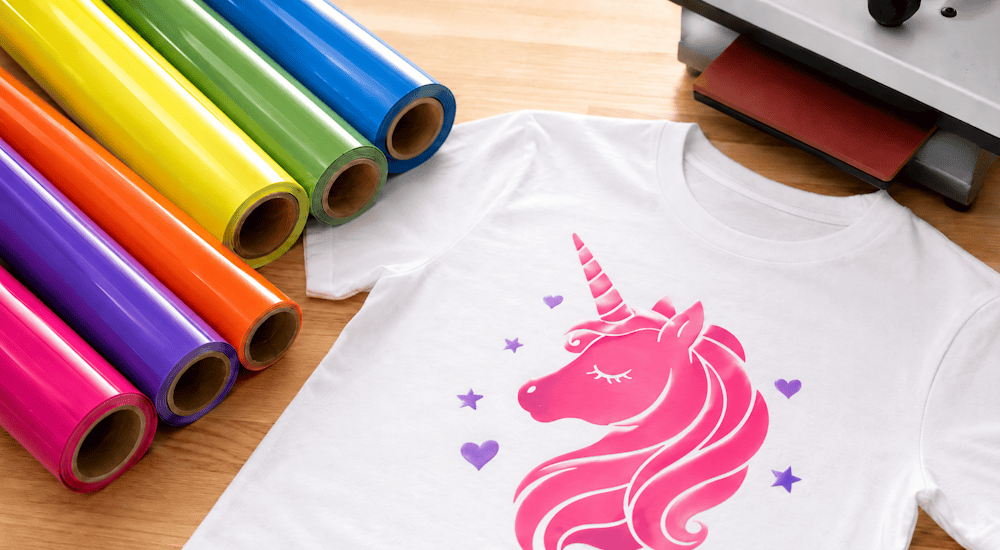
Heat transfer vinyl is becoming more and more popular with new businesses and creators who want to break into custom apparel. The two materials used for HTV are PU vinyl (polyurethane) and PVC vinyl (polyvinyl chloride), but it can be tricky to tell them apart.
That's why today we're going to cover their characteristics and their differences, so you can make the right choice when you buy 😉
What Is Heat Transfer Vinyl?
Heat transfer vinyl lets you press designs onto many types of fabric, like polyester T-shirts, cotton sweatshirts, towels, and more.
For example, the printed designs on soccer jerseys are made with heat transfer vinyl. 👕
PVC Vinyl
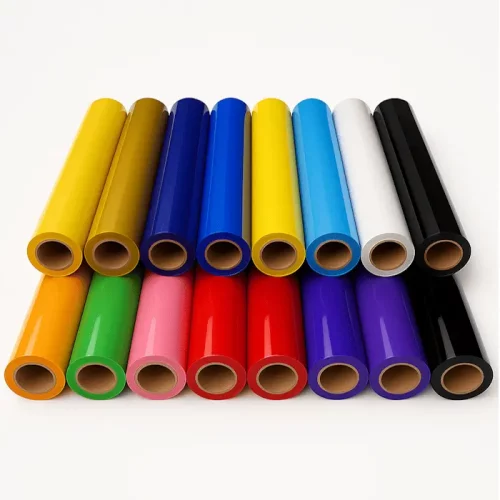
Characteristics of PVC Vinyl
As the name suggests, PVC vinyl is made of [polyvinyl chloride](https://fr.wikipedia.org/wiki/Polychlorure_de_vinyle#:~:text=Le%20poly(chlorure%20de%20vinyle,repr%C3%A9sentant%20de%20la%20famille%20chloropolym%C3%A8res.). This material is strong, but it isn't very stretchy.
PVC vinyl's durability also comes from the fact that rolls made from this material are thick, so they're hard to tear. However, if the material is put under too much tension, it can crack because it isn't very elastic.
PVC vinyl is also stiffer than PU vinyl, which gives it a slightly plasticky feel that some people like and others don't!
Rolls of PVC vinyl are generally very reasonably priced, and they hold up extremely well in the wash. Most of these vinyls can withstand more than 2 years of washing at 30°C!
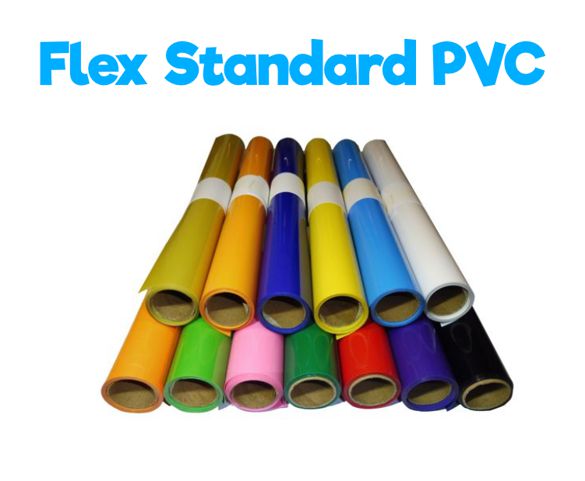
For example, at Transfer Paper, our standard PVC vinyl offers the best value for money on the market!
What Type of Fabric Is It Best For?
We recommend pressing PVC vinyl onto thick, heavyweight fabrics such as sweatshirts or pillows.
Since this product is a touch thicker than PU vinyl, it'll leave a slightly raised effect on T-shirts.
Then again, that may be exactly the look you're going for! 😜
PU Vinyl
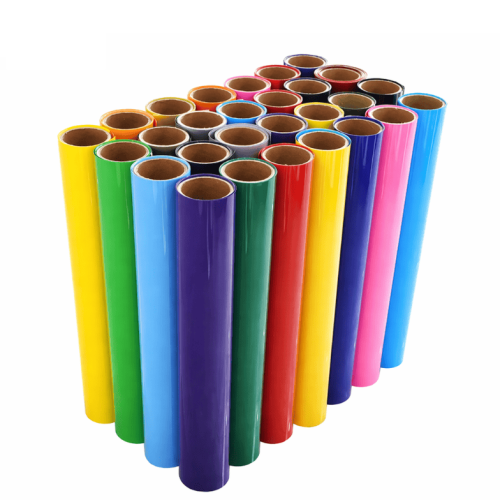
Characteristics of PU Vinyl
The main advantage of polyurethane vinyl is that it's highly elastic, which makes it nearly impossible to tear once it's bonded to the fabric.
PU vinyl is very thin, but that doesn't make it any less durable. Its flexibility lets it adapt to any situation.
What's more, a thin vinyl is often a sign of quality. It can bond perfectly with the fabric, which gives it great wash resistance. ✅
Polyurethane vinyl is generally more expensive than its PVC counterpart, and there are several reasons for that:
- Polyurethane vinyl is soft and pleasant to the touch
- Once it's on the fabric, its matte look gives it a professional finish.
- As mentioned earlier, PU vinyl's elasticity gives it a big advantage. That said, it's worth noting that the elasticity of PU vinyl makes it slightly harder to weed than PVC vinyl.
What Type of Fabric Is It Best For?
PU vinyl delivers truly outstanding quality on every type and thickness of fabric! So we recommend pressing it onto any kind of fabric!
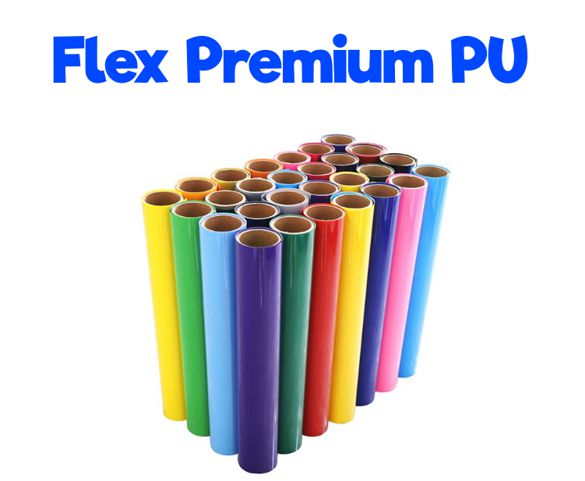
The Premium Vinyl in our range is a polyurethane vinyl you'll love using to customize clothing every day.
How Can You Tell Them Apart Easily?
As we said earlier, PVC vinyl is thicker than polyurethane vinyl, so you can compare their weight!
Another trick is to test how stretchy the two products are: if it doesn't stretch well, it's PVC.
Finally, you can easily tell them apart by comparing their finish: the more matte vinyl is the polyurethane one.
Application Tips 👍
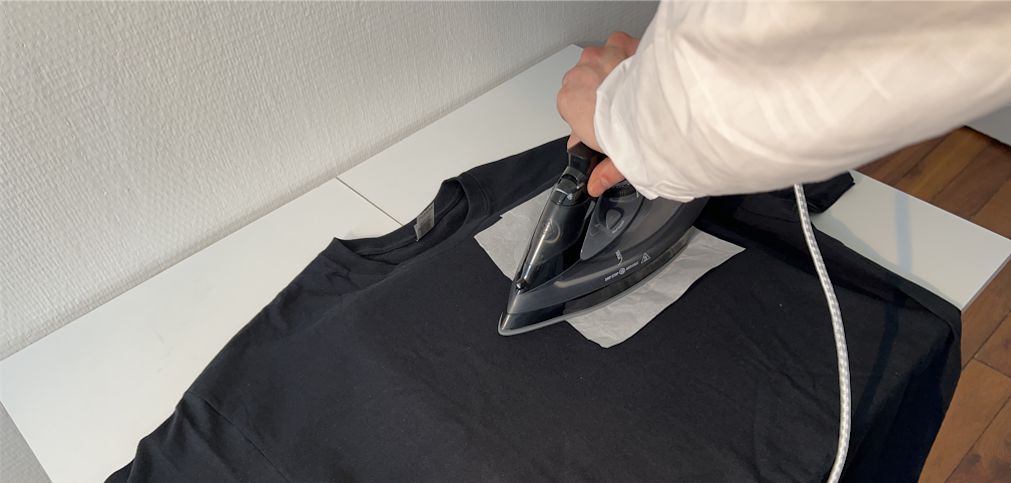
How you apply vinyl can vary from one brand and product to another. For the vinyls in our PVC and PU ranges, the application process on fabric is almost identical:
Press with an iron or a heat press for 15 to 20 seconds at 150 to 160°C.
PVC vinyl is a hot peel.
For polyurethane vinyl, wait 30 seconds before peeling.
As you've probably gathered, PU vinyl and PVC vinyl don't really compete with each other. Each one is suited to a specific use:
✔️ We recommend PVC vinyl for people who are just getting started with HTV and do it for fun.
✔️ If you want to sell your custom creations made with heat transfer vinyl, you'll need the most professional finish possible. In that case, we recommend PU vinyl, which will fully meet your expectations.
Online, it's often hard to tell PVC heat transfer vinyl from PU heat transfer vinyl, and sometimes the material isn't even listed in the product description!
That's why, at Transfer Paper, we offer both our Standard range of PVC vinyl and our Premium range of PU vinyl!
That way, you can compare the two products and see which one works best for you!
Buy PU Vinyl
Buy PVC Vinyl
Happy creating, everyone!
Comments
No comments yet. Be the first to share your experience.
Leave a comment