
Manche Ideen entstehen eher zufällig.
Eines Morgens beim Wäschefalten (ja, genau dann, wenn alle Socken wild durcheinanderliegen) fiel mir etwas ganz Simples auf: Sie sehen alle gleich aus. Ich liebe ganz schlichte weiße Socken. Aber… sie haben alle dieselbe Form. Dieselbe Farbe. Dieselbe Langeweile. Und trotzdem tragen wir sie jeden Tag.
Da kam mir die Idee. Nichts Kompliziertes. Kein großes Projekt. Einfach nur… ein Basic verwandeln. Ein Paar Socken. Ein kleines Wort. Ein Vorname. Ein Detail. Etwas, das alles verändert. Eine Personalisierung, die dich beim Anziehen zum Lächeln bringt. Oder die richtig Eindruck macht, wenn du sie verschenkst. Und vor allem etwas, das sich leicht umsetzen lässt, auch wenn du gerade erst anfängst.
Denn ja: Anders als man vielleicht denkt, brauchst du zum Personalisieren von Socken weder komplizierte Ausrüstung noch fortgeschrittene Kenntnisse.
Mit Flexfolie und ein paar Arbeitsschritten, die du im Griff hast (und die ich dir hier natürlich erkläre), bekommst du ein sauberes, langlebiges und wirklich hochwertiges Ergebnis.
In diesem Artikel zeige ich dir Schritt für Schritt, wie du deine Socken ganz einfach personalisierst, ohne dir das Leben schwer zu machen und mit einem Ergebnis, das nicht nach „schnell mal selbst gebastelt“ aussieht.
Na dann, los geht'sssss!
1. Warum Socken personalisieren?
Darüber macht man sich eigentlich nie Gedanken. Socken kauft man im Multipack, meistens ganz nebenbei. Sie sind praktisch, unauffällig… und vor allem völlig austauschbar.
Bis eine davon verschwindet, in der Schublade alles durcheinandergerät oder du mehrere identische Paare hast und nicht mehr weißt, wem sie gehören. Kurz gesagt: nichts wirklich Neues.
Aber genau weil sie so alltäglich sind, eignen sich Socken I-DE-AL zum Personalisieren!
Socken zu personalisieren heißt nicht einfach nur, ein Motiv aufzubringen. Es heißt, einen Alltagsgegenstand in etwas Unverwechselbares, Persönliches, ja sogar Emotionales zu verwandeln. Ein Vorname, ein Datum, ein ausgewähltes Wort… und schon wird die Socke einzigartig. Das ist einfach, verändert aber alles (und erspart dir schon morgens den Streit unter den Kindern, weil das eine dem anderen angeblich die Socken geklaut hat. Und ja, da weiß ich genau, wovon ich spreche!).
Außerdem sind personalisierte Socken eine Geschenkidee, die günstig und originell zugleich ist. Anders als viele Geschenke, die man schon zigmal gesehen hat, sind sie nützlich, lassen sich leicht auf die beschenkte Person abstimmen und sind schnell gemacht. Sie passen zur Geburt, zum Geburtstag, als Geschenk für Paare oder einfach als persönliche kleine Aufmerksamkeit, mit der du jemandem eine Freude machst.
Wenn du personalisierte Produkte herstellst oder verkaufst, sind Socken ebenfalls ein spannender Artikel. Die Grundkosten sind niedrig, die Umsetzung geht schnell und der wahrgenommene Wert stimmt. Genau so ein Produkt kannst du ganz leicht testen, ohne dein Sortiment zu verkomplizieren.
Was diese Personalisierung schließlich wirklich für jeden machbar macht, ist die Flexfolie. Du musst weder Profi sein noch eine komplette Werkstatt haben. Mit dem richtigen Material (und die Flexfolie von Transfer Paper hat garantiert eine gute Qualität!) und ein paar Arbeitsschritten, die du beherrschst, kannst du schon bei deinen ersten Projekten ein sauberes und langlebiges Ergebnis erzielen.
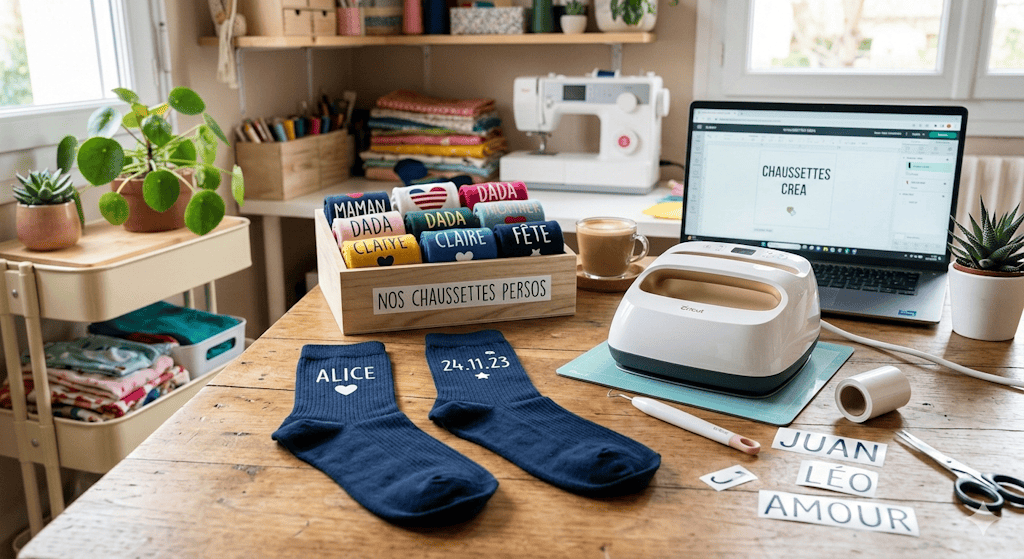
2. Dieses Material brauchst du, um Socken zu personalisieren
Bevor du loslegst, solltest du eines verstehen: Wie gut das Ergebnis wird, hängt genauso von deiner Technik ab wie vom Material, das du verwendest. Die gute Nachricht: Du brauchst keine komplizierte Ausrüstung. Allerdings solltest du von Anfang an die richtige Wahl treffen, um die typischen Fehler zu vermeiden.
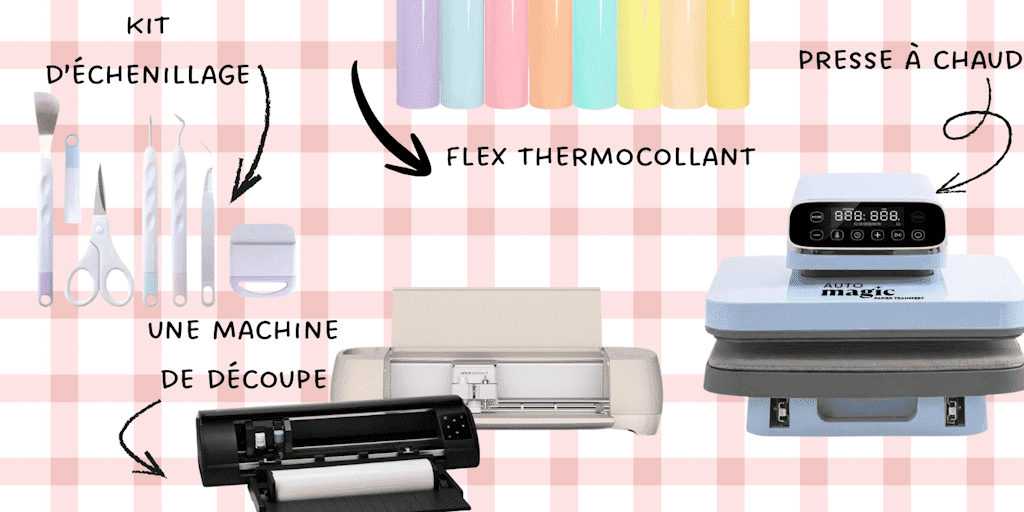
Alles beginnt mit den Socken. Und die sind nicht alle gleich gut geeignet. Für ein sauberes Ergebnis nimmst du am besten Socken mit hohem Baumwollanteil, einer relativ glatten Oberfläche und einer normalen Dicke. Sehr dehnbare, stark gerippte oder zu synthetische Stoffe erschweren dagegen das Aufbringen, und das Motiv hält weniger lange. Das klingt banal, wirkt sich aber direkt darauf aus, wie gut die Flexfolie hält.
Und genau da kommt die Flexfolie ins Spiel, das Herzstück des Projekts. Sie erweckt dein Design zum Leben. Sie lässt sich ganz leicht schneiden und wird anschließend mit Hitze auf dem Textil fixiert, für ein sauberes und präzises Ergebnis. Aber Vorsicht: Flexfolie ist nicht gleich Flexfolie. Ein minderwertiges Produkt haftet unter Umständen schlecht, löst sich schnell ab oder bekommt nach ein paar Wäschen Risse. Und dann war die ganze Zeit, die du in das Projekt gesteckt hast, umsonst… Deshalb lohnt es sich, von Anfang an in eine zuverlässige Flexfolie zu investieren, damit solche Probleme gar nicht erst auftreten.
Beim Schneiden hast du zwei Möglichkeiten. Du kannst einen Schneideplotter verwenden, zum Beispiel eine Cricut Maker 4 oder auch eine Silhouette Cameo 5. Damit arbeitest du präzise und schnell, vor allem wenn du regelmäßig kreativ sein (oder deine Produkte verkaufen) möchtest. Für einfache Designs kannst du aber auch von Hand zuschneiden. Was besser passt, hängt vor allem davon ab, wofür du es brauchst und wie hoch deine Ansprüche sind.
Danach wird gepresst. Um die Flexfolie zu fixieren, brauchst du entweder eine Transferpresse oder notfalls ein ganz normales Bügeleisen. Mit der Presse wird das Ergebnis gleichmäßiger, aber für den Anfang reicht auch ein Bügeleisen, wenn du sorgfältig arbeitest. In jedem Fall sind beim Aufbringen der Flexfolie drei Dinge entscheidend: die Temperatur, der Druck und die Pressdauer. Eine falsche Einstellung kann das Ergebnis ruinieren, selbst mit gutem Material und den besten Absichten der Welt.
Und zum Schluss ein Detail, das oft vergessen wird, aber wichtig ist: die Unterlage in der Socke. Das mag albern und überflüssig wirken, aber… ein Stück Karton, das du hineinschiebst, sorgt für eine schön ebene Fläche, verhindert, dass die Flexfolie auf der Rückseite festklebt (und dabei gleich beide Seiten der Socke miteinander verbindet), und verbessert die Haftung insgesamt.
Damit hast du eine solide Grundlage, um unter guten Bedingungen zu arbeiten. Im nächsten Teil wird es noch konkreter: Wir kommen zu den einzelnen Schritten, mit denen du deine Socken ganz einfach und ohne Fehler personalisierst! Und dafür gibt es nichts Besseres als ein TUTORIAL by Alyah, haha!
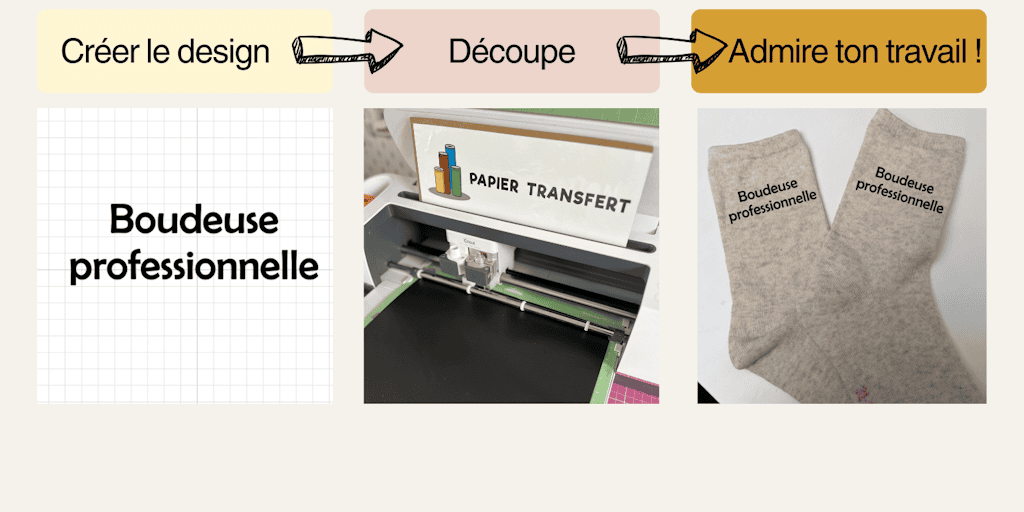
3. Schritt für Schritt: Socken ganz einfach personalisieren
Sobald das Material bereitliegt, kommt es ganz auf die Umsetzung an. Der Ablauf ist einfach, aber für ein sauberes und langlebiges Ergebnis zählt jeder einzelne Schritt. Also gut festhalten und mitschreiben!
Alles beginnt mit dem Design. Ob du dich für einen Vornamen, Initialen oder ein kleines Wort entscheidest: Hauptsache, es bleibt gut lesbar. Auf einer Socke ist die Fläche klein und leicht dehnbar, ein zu feines oder detailreiches Motiv kommt deshalb womöglich nicht gut zur Geltung.
Danach schneidest du die Flexfolie. Leg sie richtig herum auf (glänzende Seite nach unten auf die Schneidematte) und schneide dein Motiv gespiegelt. Achtung: Das Spiegeln ist superwichtig, sonst steht dein Design nach dem Aufpressen verkehrt herum! Wenn du von Hand schneidest, bleib bei etwas Einfachem, damit das Ergebnis sauber bleibt. Der Schritt geht schnell, ist aber wichtig: Ein ungenauer Schnitt fällt am Ende garantiert auf.
Dann folgt das Entgittern, also das Entfernen der überschüssigen Folie, sodass nur noch dein Design übrig bleibt. Nimm dir dafür Zeit. Vor allem aber brauchst du wirklich hilfreiche Werkzeuge wie das Entgittern-Set. Genau das macht oft den Unterschied zwischen einem sauberen und einem unsauberen Ergebnis. Jedes Detail zählt!
Sobald dein Design fertig ist, bereitest du die Socke vor. Schieb eine Unterlage hinein, damit die Fläche schön eben ist (ich nehme dafür ein Stück von einem Pappkarton), streich den Stoff glatt und leg dein Motiv an die gewünschte Stelle. Prüf kurz, ob es gerade sitzt, denn ein schief platziertes Design fällt sofort auf. Damit das nicht passiert, kannst du ein T-Shirt-Ausrichtungslineal verwenden (das ist echt superpraktisch!).
Anschließend geht es ans Pressen. Ob du eine Transferpresse oder ein Bügeleisen verwendest: Halte dich genau an die empfohlenen Einstellungen für Temperatur, Druck und Pressdauer. Wenn du mit dem Bügeleisen arbeitest, fahr damit nicht hin und her, sondern drück gleichmäßig auf. Ziel ist, dass die Flexfolie richtig auf dem Textil haftet. Aber vor allem: Benutz keinen Dampf! NIEMALS! Sonst kannst du direkt wieder von vorne anfangen (und das wollen wir ja lieber vermeiden).
Wenn du fertig bist, lass alles ein paar Sekunden abkühlen und zieh dann die Trägerfolie vorsichtig ab. Prüf, ob alles gut hält und sich nirgends etwas ablöst. Falls nötig, presst du noch einmal kurz nach (mit einer Teflonfolie zwischen Motiv und Hitzequelle, sonst klebt die Flexfolie direkt an deiner Transferpresse fest).
Damit das Motiv lange hält, solltest du die Socke zum Schluss mindestens 24 Stunden ruhen lassen, bevor du sie wäschst. Danach wäschst du sie am besten schonend und verzichtest auf den Trockner. Das sind einfache Details, aber auf Dauer machen sie den entscheidenden Unterschied.
Mit diesen Schritten kannst du deine Socken ganz einfach personalisieren, auch wenn du noch Anfänger bist. Als Nächstes schauen wir uns an, wie du mit wirklich spannenden Ideen noch weiter gehen kannst, egal ob zum Verschenken oder zum Verkaufen.
4. Ideen zum Personalisieren, die echten Mehrwert bringen
Wenn du die Technik beherrschst, lautet die eigentliche Frage nicht mehr „Wie mache ich das?“, sondern „Was gestalte ich?“. Denn am Ende macht nicht die Socke den Unterschied, sondern die Botschaft, die du damit vermittelst. Genau das macht aus einer einfachen Personalisierung etwas, das im Gedächtnis bleibt… oder sich gut verkauft.
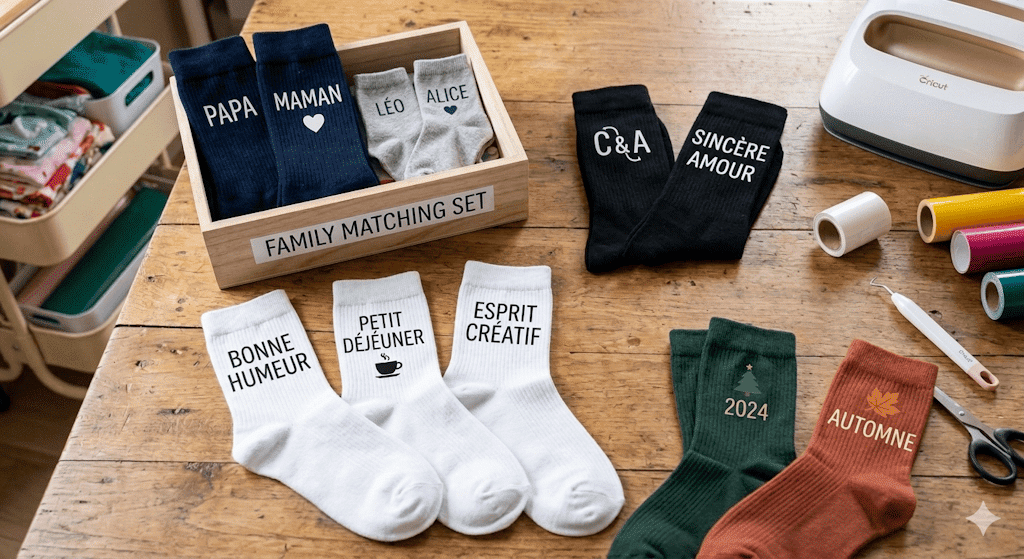
Vornamen und Initialen sind nach wie vor eine gute Basis. Ganz einfach, aber es funktioniert immer. So lässt sich ein Paar leicht zuordnen, nichts wird mehr verwechselt und vor allem entsteht etwas Persönliches, ohne dass es zu viel wird. Das passt besonders gut für Kinder, als Geschenk zur Geburt oder sogar als Set für die ganze Familie.
Du kannst auch mit kurzen Botschaften spielen. Manchmal reichen ein paar gut gewählte Worte völlig aus. Ein Wort, das zur Stimmung passt, ein kleiner Spruch oder ein Augenzwinkern verleihen deiner Kreation Charakter. Es geht nicht darum, dick aufzutragen, sondern genau ins Schwarze zu treffen, mit etwas, das gut lesbar ist und Wirkung zeigt.
Eine weitere spannende Idee sind aufeinander abgestimmte Sets. Wenn du Socken im Duo oder als Serie anbietest, gehst du über das einzelne Paar hinaus. Ob für ein Pärchen, Elternteil und Kind oder Geschwister: Du schaffst etwas Zusammengehöriges, fast eine kleine Geschichte. Und wenn du verkaufst, kannst du so auch Sets statt einzelner Produkte anbieten.
Du kannst auch thematische Kollektionen entwickeln. Wenn du deine Kreationen auf bestimmte Zeiten im Jahr, Anlässe oder Jahreszeiten abstimmst, kannst du dein Angebot immer wieder erneuern und trotzdem eine stimmige Linie beibehalten. So bringst du ganz einfach Abwechslung in deine Kreationen und hast immer etwas Aktuelles im Angebot.
Der wichtigste Punkt wird dabei am häufigsten vergessen: Denk zuerst an den Verwendungszweck und erst dann an das Design. Frag dich, noch bevor du loslegst, wofür dieses Paar Socken gedacht ist. Ein Geschenk? Ein Alltagsprodukt? Ein Gegenstand mit symbolischer Bedeutung? Je besser deine Personalisierung zum Verwendungszweck passt, desto treffender und wirkungsvoller wird sie.
Socken zu personalisieren heißt nicht, wahllos eine Idee an die nächste zu reihen. Es geht darum, einfache und stimmige Entscheidungen zu treffen, die zu einer ganz bestimmten Absicht passen. Als Nächstes schauen wir uns an, welche Fehler du vermeiden solltest, damit das Ergebnis sauber und langlebig wird.
5. Diese Fehler solltest du für ein sauberes und langlebiges Ergebnis vermeiden
Socken zu personalisieren ist nicht schwer, aber manche Fehler können das Ergebnis schnell ruinieren.
Und meistens sind es immer wieder dieselben, vor allem am Anfang.
Wer sie kennt, kann sie schon vermeiden.
Das falsche Textil wählen
Nicht alle Socken reagieren gleich auf Hitze und Flexfolie.
Ein zu dehnbarer, zu dicker oder überwiegend synthetischer Stoff kann verhindern, dass die Folie richtig haftet, das Design beim Tragen verziehen und damit natürlich auch die Haltbarkeit verringern…
Wenn du von Anfang an ein geeignetes Material wählst, ersparst du dir solche Probleme (und nebenbei auch das Haareraufen, haha).
Die Einstellungen für Temperatur und Druck unterschätzen
Beim Aufbringen von Flexfolie kommt es nicht nur auf die Hitze an.
Drei Faktoren musst du im Griff haben:
-
die Temperatur
-
die Pressdauer
-
den Druck
Ist die Temperatur zu niedrig, haftet die Flexfolie nicht richtig.
Ist sie dagegen zu hoch, kann das Textil Schaden nehmen (und die Flexfolie verbrennen…).
Genauso führt zu wenig Druck zu einem empfindlichen Ergebnis, das sich schnell ablösen kann. Und dann kannst du deiner Personalisierung schon nach der ersten Wäsche „Bye bye“ sagen.
Die Unterlage in der Socke vergessen
Ein einfaches, aber wichtiges Detail.
Ohne Unterlage:
-
ist die Fläche nicht eben
-
verteilt sich der Druck ungleichmäßig
-
kann die Flexfolie Abdrücke hinterlassen oder auf der Rückseite festkleben
Mit einem Stück Karton in der Socke wird das Endergebnis deutlich besser.
Ein zu kompliziertes Design wählen
Eine Socke bietet nicht so viel Fläche wie ein T-Shirt oder ein Stoffbeutel.
Ein zu feines, zu überladenes oder zu detailreiches Design kann:
-
das Schneiden erschweren
-
das Entgittern mühsam machen
-
die Lesbarkeit beeinträchtigen
Setz lieber auf einfache, klare Motive, die zum Untergrund passen.
Nach dem Aufbringen zu ungeduldig sein
Sobald die Flexfolie aufgebracht ist, solltest du das Textil erst einmal „ruhen“ lassen.
Wäschst du zu früh, kann das:
-
die Haftung schwächen
-
die Lebensdauer des Motivs verkürzen
Warte vor der ersten Wäsche am besten mindestens 24 Stunden und achte danach auf Folgendes:
-
bei niedriger Temperatur waschen
-
das Textil auf links drehen
-
auf den Trockner verzichten
Minderwertige Flexfolie verwenden
Ein häufiger Fehler, oft weil man sparen möchte.
Flexfolie von unzureichender Qualität kann:
-
schlecht haften
-
Risse bekommen
-
schon nach den ersten Wäschen nicht mehr richtig halten
Bei solchen Projekten spielt die Materialqualität eine zentrale Rolle für das Endergebnis.
Bei Transfer Paper ist die Flexfolie ein Garant für Qualität. Einmal ausprobiert, nie mehr ohne!
Schon wenn du diese Fehler vermeidest, bekommst du ein sauberes, langlebiges und stimmiges Ergebnis.
Mit einer guten technischen Grundlage, passendem Material und durchdachten Designentscheidungen wird das Personalisieren von Socken einfach, effektiv und für jeden machbar.
Socken zu personalisieren wirkt auf den ersten Blick vielleicht nebensächlich.
Und doch ist es genau die Art von Projekt, die zeigt, dass man mit wenigen Mitteln etwas gestalten kann, das sich wirklich abhebt.
Aus einem einfachen Alltagsgegenstand machst du so etwas Nützliches, Persönliches und optisch Wirkungsvolles.
Der Schlüssel liegt nicht in der Komplexität, sondern in der Umsetzung:
ein gutes Textil, eine hochwertige Flexfolie, ein passendes Design… und vor allem sorgfältiges Aufbringen.
Außerdem ist es ein super Einstieg, wenn du mit Textilgestaltung anfangen oder ein neues Produkt testen möchtest, ohne dir die Produktion zu verkomplizieren.
Egal ob zum Verschenken, Gestalten oder Verkaufen, personalisierte Socken haben einen klaren Vorteil:
Sie sind leicht umsetzbar, schnell gemacht und lassen sich vielfältig abwandeln.
Jetzt musst du es nur noch ausprobieren.
FAQ: Socken personalisieren
Hält Flexfolie gut auf Socken?
Ja, wenn du die richtigen Schritte beachtest.
Bei korrektem Aufbringen (Temperatur, Druck, Zeit) hält das Motiv zuverlässig, auch nach mehreren Wäschen.
Kann ich ein Bügeleisen statt einer Transferpresse verwenden?
Ja, das geht problemlos.
Für den Anfang reicht ein Bügeleisen, solange du fest und gleichmäßig drückst, ohne es zu bewegen.
Mit einer Transferpresse wird das Ergebnis aber gleichmäßiger, und vor allem lässt sich die Flexfolie damit viel leichter aufbringen.
Welche Socken eignen sich am besten?
Am besten verwendest du Socken, die:
-
überwiegend aus Baumwolle bestehen
-
eine relativ glatte Oberfläche haben
-
weder zu dünn noch zu dick sind
Diese Eigenschaften sorgen dafür, dass die Flexfolie besser haftet und länger hält.
Muss ich warten, bevor ich die personalisierten Socken wasche?
Ja. Nach dem Aufbringen solltest du mindestens 24 Stunden warten, bevor du sie zum ersten Mal wäschst.
Damit das Motiv lange schön bleibt, wäschst du die Socken danach bei niedriger Temperatur, auf links gedreht und ohne Trockner.
Kann ich auch ohne Schneideplotter personalisieren?
Ja, das ist durchaus möglich. Einfache Designs kannst du auch von Hand zuschneiden.
Ein Schneideplotter spart dir aber Zeit und arbeitet präziser, vor allem bei detailreicheren Motiven.
Ist Flexfolie für Anfänger geeignet?
Absolut, sie gehört sogar zu den einfachsten Techniken überhaupt.
Mit etwas Übung und wenn du die Schritte richtig befolgst, bekommst du schon bei deinen ersten Projekten ein sauberes Ergebnis.
Wenn du gerade erst anfängst, starte mit etwas Einfachem, probier aus, justiere nach… und verbessere deine Kreationen Schritt für Schritt.
So werden deine Ergebnisse immer sauberer und professioneller.
Zeig uns übrigens gern, was du gestaltest: Teile deine Kreationen und markiere uns mit @papiertransfert!

Kommentare
Noch keine Kommentare. Schreib den ersten und teile deine Erfahrung.
Kommentar schreiben